10 Best Vulnerable Websites for Penetration Testing and Ethical Hacking
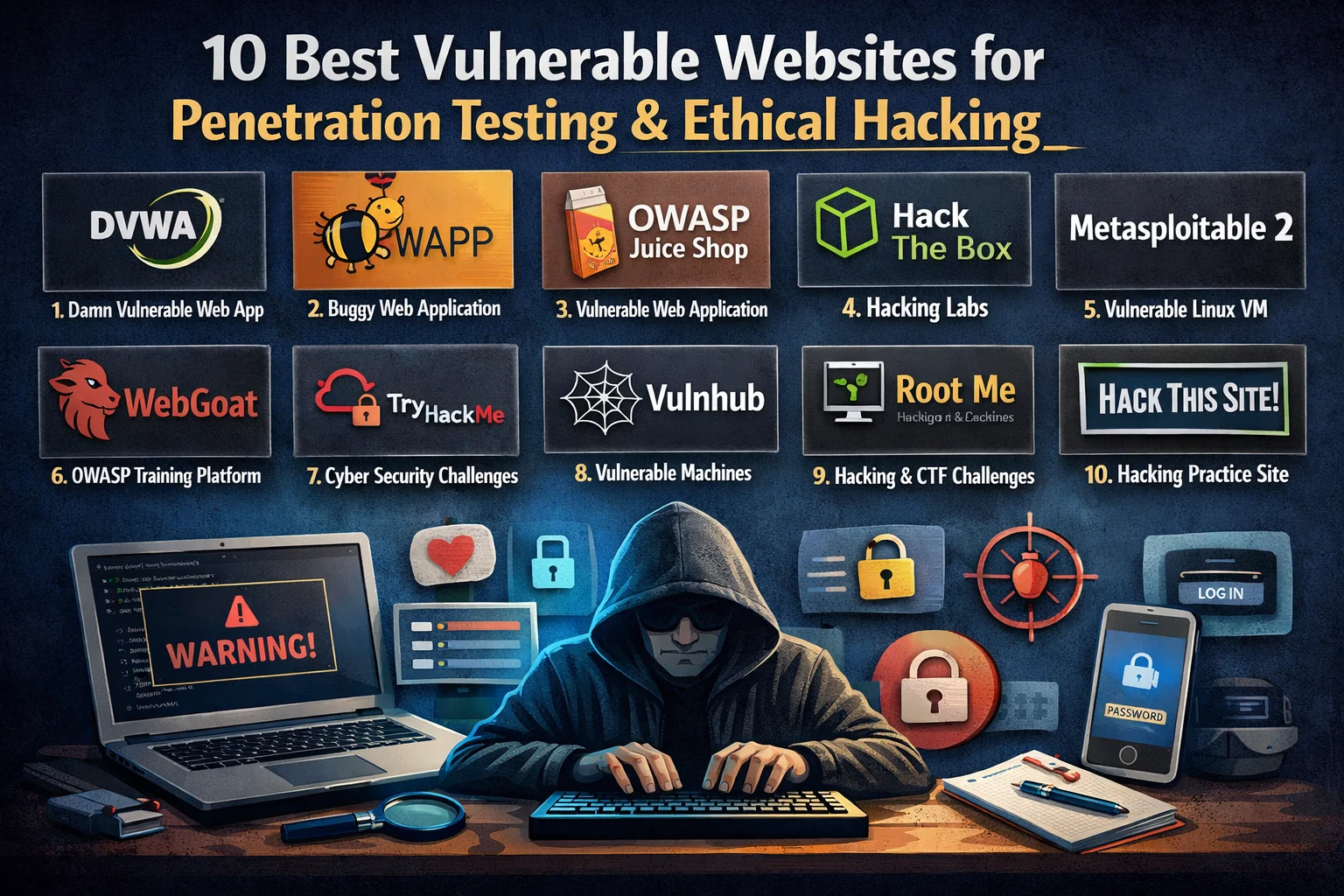
Table of Contents
Introduction: Why Practice on Vulnerable Websites?
In the rapidly evolving world of cybersecurity, ethical hackers and penetration testers need safe, legal environments to develop and sharpen their skills. Whether you're a beginner just starting your journey into web security or an experienced professional looking to stay current with emerging threats, practicing on intentionally vulnerable websites is essential for building real-world expertise.
As we progress through 2025, the cyber threat landscape continues to evolve with technologies like AI, serverless computing, and microservices becoming more widespread, bringing new vulnerabilities and attack vectors. Organizations worldwide need security professionals who can identify and fix vulnerabilities before malicious actors exploit them, with penetration testing experiencing significant transformation driven by AI automation, cloud-based delivery models, and the growing demand for continuous security validation.
This comprehensive guide explores the 10 best vulnerable websites and platforms designed specifically for penetration testing practice, covering everything from beginner-friendly applications to advanced hacking challenges updated for 2025.
What Are Vulnerable Websites for Ethical Hacking?
Vulnerable websites are web applications intentionally designed with security flaws to provide a controlled, legal environment for cybersecurity training. Unlike real-world websites where unauthorized hacking is illegal and punishable by law, these platforms explicitly permit testing and exploitation.
Key benefits of practicing on vulnerable websites include:
- Legal and safe learning environment - No risk of arrest or prosecution
- Hands-on experience - Practice finding and exploiting real vulnerabilities
- Skill progression - Move from basic to advanced techniques at your own pace
- Portfolio development - Build proof of your capabilities for job applications
- Stay current - Learn about emerging threats and modern attack techniques
- Tool mastery - Practice with industry-standard tools like Burp Suite, OWASP ZAP, and Metasploit
The 10 Best Vulnerable Websites for Penetration Testing
1. Hack The Box (HTB)
Website: https://www.hackthebox.com
Skill Level: Beginner to Advanced
Hack The Box has become the gold standard for penetration testing practice platforms, now boasting over 3 million platform members—the largest global cybersecurity community. HTB contains vulnerable machines that you are invited to hack—it even goes so far as to require you to hack your way to the invitation code that allows you to begin practicing on it.
Key Features: - Over 500 active vulnerable machines ranging from easy to insane difficulty - Realistic scenarios simulating real-world enterprise environments, including 2025 updates with AI-driven threat simulations in Pro Labs - CTF (Capture The Flag) competitions with global leaderboards - Dedicated labs available for organizations and educational institutions - Recognized as the Cyber Performance Center combining upskilling with workforce development - Available in both VPN-based access and browser-based Pwnbox service
What You'll Learn: - Network penetration testing - Web application vulnerabilities - Privilege escalation techniques - Active Directory exploitation - Post-exploitation and lateral movement
Pricing: Free tier with limited access; VIP subscription at $14/month for full machine access (note: HTB Academy is a separate subscription for structured learning materials)
Best For: Serious learners who want challenging, realistic scenarios that mirror professional penetration testing engagements.
2. TryHackMe
Website: https://tryhackme.com
Skill Level: Beginner to Intermediate
TryHackMe stands out for its beginner-friendly approach and guided learning paths. TryHackMe transforms ethical hacking into an interactive game, offering guided rooms with step-by-step instructions.
Key Features: - Over 500 hands-on rooms covering various cybersecurity topics - Structured learning paths like "Complete Beginner" and "Offensive Pentesting" (paths updated in April 2025 to streamline learning) - Browser-based Kali Linux access with Attack Box - no local setup required - Gamified experience with badges, ranks, and progress tracking - Community Discord with 100,000+ members - Unified platform where all content is accessible through one subscription
What You'll Learn: - Web exploitation fundamentals - Linux and Windows privilege escalation - Network security basics - Forensics and incident response - OWASP Top 10 vulnerabilities
Pricing: Free tier with 20+ rooms; Premium subscription at $10.50/month
Best For: Complete beginners who want structured, guided learning with a supportive community.
3. PortSwigger Web Security Academy
Website: https://portswigger.net/web-security
Skill Level: Beginner to Advanced
Created by the makers of Burp Suite, the Web Security Academy is a free online training center for web application security that includes content from PortSwigger's in-house research team and experienced academics.
Key Features: - 100% free with no subscription required - Over 200 interactive labs focused on web vulnerabilities - Comprehensive written content and video tutorials - Regularly updated with cutting-edge research - Hall of Fame for top performers
What You'll Learn: - SQL injection techniques - Cross-site scripting (XSS) - Authentication vulnerabilities - Server-side request forgery (SSRF) - Advanced topics like HTTP request smuggling
Pricing: Completely free
Best For: Web application security specialists and anyone preparing for bug bounty hunting or web-focused penetration testing roles.
4. OWASP Juice Shop
Website: https://owasp.org/www-project-juice-shop
Skill Level: Beginner to Advanced
Juice Shop is an OWASP project described as the most modern and sophisticated insecure web application, written entirely in JavaScript using Node.js, Express, and Angular.
Key Features: - Modern web application using current technologies - Over 100 hacking challenges with varying difficulty - Gamified scoreboard tracking your progress - Detailed documentation and walkthroughs available - Can be run locally via Docker or online
What You'll Learn: - OWASP Top 10 vulnerabilities in modern context - API security issues - Broken authentication and authorization - Injection attacks in JavaScript applications - Client-side security vulnerabilities
Pricing: Free and open source
Best For: Developers and testers working with modern JavaScript frameworks who want relevant, up-to-date security training.
5. Damn Vulnerable Web Application (DVWA)
Website: http://www.dvwa.co.uk
Skill Level: Beginner to Intermediate
DVWA is developed in PHP and MySQL and is intentionally left vulnerable so security professionals and ethical hackers can test their skills without legally compromising anyone's system.
Key Features: - Three security levels (Low, Medium, High) for progressive learning - Source code access for understanding backend vulnerabilities - Easy setup with XAMPP - Classic vulnerabilities that remain relevant today - Extensive documentation and tutorials
What You'll Learn: - SQL injection exploitation - Cross-site scripting (XSS) - Command injection - File inclusion vulnerabilities - CSRF (Cross-Site Request Forgery)
Pricing: Free and open source
Best For: Beginners who want to understand fundamental web vulnerabilities with clear examples and multiple difficulty levels.
6. WebGoat
Website: https://owasp.org/www-project-webgoat
Skill Level: Beginner to Intermediate
WebGoat is a vulnerable web application written in Java and maintained by OWASP, designed to teach web application security and penetration techniques.
Key Features: - Lessons organized by vulnerability type - Interactive tutorials with hints and solutions - Over 40 lessons covering common vulnerabilities - Built-in guidance for each challenge - Runs locally on Tomcat server
What You'll Learn: - Injection flaws - Broken authentication - Sensitive data exposure - XML external entities (XXE) - Security misconfigurations
Pricing: Free and open source
Best For: Learners who prefer structured lessons with built-in guidance and educational content alongside practical challenges.
7. PentesterLab
Website: https://pentesterlab.com
Skill Level: Beginner to Advanced
PentesterLab offers a structured bootcamp approach to learning penetration testing with progressively challenging exercises aligned with industry standards.
Key Features: - Bootcamp syllabus covering essential skills - Pre-made vulnerable applications included - Video tutorials and written walkthroughs - Badge system for completed exercises - Regular content updates
What You'll Learn: - Web application testing methodology - Code review techniques - Advanced exploitation methods - Real-world vulnerability chains - Report writing skills
Pricing: Free exercises available; Pro subscription at $19/month
Best For: Methodical learners who want a structured curriculum that builds skills systematically.
8. VulnHub
Website: https://www.vulnhub.com
Skill Level: Intermediate to Advanced
VulnHub is a platform that provides vulnerable virtual machines that users can download and run locally, offering a hands-on approach to learning penetration testing.
Key Features: - Over 200 downloadable virtual machines - Diverse difficulty levels and scenarios - Works offline once downloaded - Community-contributed content - Detailed walkthroughs available
What You'll Learn: - Full system compromise techniques - Privilege escalation - Network enumeration - Service exploitation - Post-exploitation strategies
Pricing: Completely free
Best For: Advanced learners who want to practice complete machine takeovers in an offline environment.
9. bWAPP (Buggy Web Application)
Website: http://itsecgames.com
Skill Level: Beginner to Intermediate
bWAPP is a free and open-source tool for students, developers, and security professionals that contains more than 100 bugs for practice, including all major and most common known vulnerabilities.
Key Features: - Over 100 web application vulnerabilities - Multiple security levels - Covers OWASP Top 10 comprehensively - Easy installation with XAMPP included - Reset functionality for fresh starts
What You'll Learn: - A-Z of web vulnerabilities - HTML injection - Server-side includes (SSI) - Remote and local file inclusion - Session management issues
Pricing: Free and open source
Best For: Learners who want comprehensive coverage of web vulnerabilities in a single application.
10. OverTheWire
Website: https://overthewire.org
Skill Level: Beginner to Advanced
OverTheWire offers wargames that teach cybersecurity concepts through progressive challenges, starting with basic command-line skills and advancing to complex exploitation techniques.
Key Features: - Multiple wargame series (Bandit, Natas, Leviathan, etc.) - SSH-based challenges - Progressive difficulty within each series - Community forums for hints - No graphical interface - pure command line
What You'll Learn: - Linux command-line mastery - Scripting and automation - Cryptography basics - Web-based exploitation - Binary exploitation (advanced series)
Pricing: Completely free
Best For: Those who want to build strong foundational Linux and command-line skills essential for penetration testing.
Comparison Table: Quick Reference Guide
| Platform | Best For | Difficulty | Cost | Primary Focus |
|---|---|---|---|---|
| Hack The Box | Realistic scenarios | Beginner-Advanced | $14/mo (VIP) | Network & Web |
| TryHackMe | Guided learning | Beginner-Intermediate | $10.50/mo | Broad coverage |
| PortSwigger Academy | Web security | Beginner-Advanced | Free | Web apps |
| OWASP Juice Shop | Modern apps | Beginner-Advanced | Free | JavaScript/APIs |
| DVWA | Fundamentals | Beginner-Intermediate | Free | Classic web vulns |
| WebGoat | Structured lessons | Beginner-Intermediate | Free | Educational |
| PentesterLab | Methodology | Beginner-Advanced | $19/mo | Comprehensive |
| VulnHub | System compromise | Intermediate-Advanced | Free | Full takeover |
| bWAPP | Comprehensive practice | Beginner-Intermediate | Free | Web vulnerabilities |
| OverTheWire | CLI skills | Beginner-Advanced | Free | Linux/Command line |
Essential Tools for Penetration Testing Practice
To maximize your learning on these vulnerable websites, you'll need the right tools. Here are the industry-standard tools every ethical hacker should know:
Primary Tools:
Burp Suite - The industry standard for web application security testing. Available in free Community Edition and Professional versions.
OWASP ZAP - Free, open-source alternative to Burp Suite with automated scanning capabilities.
Metasploit Framework - Comprehensive exploitation framework for testing vulnerabilities and developing exploits.
Nmap - Network scanning and enumeration tool for discovering hosts, services, and vulnerabilities.
Kali Linux - Specialized Linux distribution with hundreds of pre-installed penetration testing tools.
Supporting Tools:
- SQLmap - Automated SQL injection detection and exploitation
- Nikto - Web server vulnerability scanner
- Wireshark - Network protocol analyzer
- Gobuster/DirBuster - Directory and file brute-forcing
- John the Ripper - Password cracking tool
How to Get Started: Step-by-Step Guide
For Complete Beginners:
Step 1: Build Foundational Knowledge - Start with TryHackMe's "Complete Beginner" path - Learn basic Linux commands on OverTheWire's Bandit - Understand web technologies (HTML, HTTP, databases)
Step 2: Practice Basic Vulnerabilities - Work through DVWA on low security setting - Complete PortSwigger Academy's beginner labs - Try WebGoat's introductory lessons
Step 3: Progress to Intermediate Challenges - Increase DVWA difficulty to medium - Tackle OWASP Juice Shop easy challenges - Complete TryHackMe rooms independently
Step 4: Advanced Practice - Attempt Hack The Box easy machines - Download VulnHub VMs for offline practice - Participate in CTF competitions
Time Investment:
Expect to spend 5-10 hours per week for 3-6 months to build solid foundational skills. Consistency matters more than intensity.
Common Vulnerabilities You'll Master
SQL Injection
Manipulating database queries to access unauthorized data or bypass authentication. SQL injection gained popularity when attackers input SQL code into queries to alter the database, potentially accessing information they shouldn't or even modifying the database.
Cross-Site Scripting (XSS)
Injecting malicious scripts into trusted websites that execute in other users' browsers, potentially stealing session cookies or credentials.
Cross-Site Request Forgery (CSRF)
Forcing authenticated users to execute unwanted actions on web applications where they're currently logged in.
Command Injection
Executing arbitrary system commands on the target server through vulnerable input fields.
File Inclusion Vulnerabilities
Exploiting applications to access unauthorized files on the server (Local File Inclusion) or execute remote files (Remote File Inclusion).
Broken Authentication
Exploiting weaknesses in authentication mechanisms like weak passwords, session management, or password reset functions.
Security Misconfigurations
Taking advantage of default configurations, unnecessary services, or verbose error messages.
Legal and Ethical Considerations
CRITICAL REMINDER: Only practice penetration testing on platforms explicitly designed for it or systems you own or have written permission to test. Unauthorized hacking is illegal in virtually every jurisdiction worldwide.
Legal Guidelines:
✅ DO: - Practice on intentionally vulnerable platforms listed in this article - Test your own applications and systems - Obtain written permission before testing any system - Follow responsible disclosure practices if you find real vulnerabilities
❌ DON'T: - Test production websites without authorization - Share or exploit vulnerabilities maliciously - Use techniques learned here for illegal purposes - Attack systems you don't have permission to test
Violations can result in criminal prosecution under laws like the Computer Fraud and Abuse Act (CFAA) in the United States or similar legislation in other countries.
Career Paths and Certifications
Mastering these vulnerable websites can launch your career in cybersecurity. Consider these paths:
Entry-Level Roles:
- Junior Penetration Tester
- Security Analyst
- Bug Bounty Hunter
- SOC Analyst
Valuable Certifications:
- OSCP (Offensive Security Certified Professional) - Industry gold standard
- CEH (Certified Ethical Hacker) - Widely recognized foundation
- PNPT (Practical Network Penetration Tester) - Practical focus
- eWPT (eLearnSecurity Web Application Penetration Tester) - Web-focused
Advanced Roles:
- Senior Penetration Tester
- Red Team Operator
- Application Security Engineer
- Security Researcher
Tips for Effective Learning
1. Take Detailed Notes Document your methodology, tools used, and lessons learned. Consider using platforms like Notion, Obsidian, or GitBook.
2. Understand the "Why" Don't just exploit vulnerabilities—understand why they exist and how developers can prevent them.
3. Join Communities Engage with Discord servers, Reddit communities (r/netsec, r/HowToHack), and platform-specific forums for support and knowledge sharing.
4. Practice Regularly Consistency beats intensity. Daily 30-minute sessions are more effective than occasional marathon sessions.
5. Build a Home Lab Set up a virtualized environment with VirtualBox or VMware to practice offline and experiment safely.
6. Write Walkthroughs Teaching others solidifies your understanding. Write blog posts or create videos explaining your solutions.
7. Participate in CTFs Capture The Flag competitions provide time-bound challenges that simulate real pressure and improve problem-solving speed.
Additional Resources
Books:
- "The Web Application Hacker's Handbook" by Dafydd Stuttard
- "Penetration Testing: A Hands-On Introduction" by Georgia Weidman
- "Black Hat Python" by Justin Seitz
YouTube Channels:
Blogs and Websites:
Frequently Asked Questions
Q: Do I need programming knowledge to start? A: Basic programming understanding helps, but you can start without it. As you progress, learning Python, JavaScript, and Bash will become increasingly valuable.
Q: How long until I'm job-ready? A: With consistent practice (10-15 hours weekly), expect 6-12 months to reach entry-level competency. However, learning never stops in cybersecurity.
Q: Should I pay for premium subscriptions? A: Start with free resources. Once you've completed free content and remain committed, paid subscriptions offer excellent value through structured content and additional challenges.
Q: Can I practice on my mobile device? A: Some platforms like PortSwigger Academy have limited mobile compatibility, but serious penetration testing requires a laptop or desktop with proper tools installed.
Q: What operating system should I use? A: Linux (particularly Kali Linux or Parrot OS) is preferred for penetration testing due to pre-installed tools, though you can start on Windows or macOS and use virtual machines.
Conclusion: Your Journey Starts Now
The path to becoming a skilled ethical hacker and penetration tester is challenging but rewarding. These 10 vulnerable websites provide everything you need to develop practical, job-ready skills in a safe, legal environment.
Remember that cybersecurity is not just about breaking things—it's about understanding systems deeply enough to defend them. The skills you develop practicing on these platforms directly translate to protecting organizations from real threats.
Your action plan: 1. Choose 2-3 platforms that match your current skill level 2. Dedicate consistent time each week to practice 3. Join communities for support and knowledge sharing 4. Document your learning journey 5. Progress from beginner to advanced challenges systematically 6. Consider certification paths as you gain confidence
The cybersecurity field needs talented, ethical professionals. Whether you're pursuing a career change, enhancing your development skills, or simply passionate about security, these vulnerable websites are your gateway to mastery.
Start today with TryHackMe's beginner rooms or PortSwigger Academy's introductory labs. Every expert started exactly where you are now. The only difference between you and them is that they took the first step.
Remember: Practice ethically, learn continuously, and always stay curious. The digital world needs defenders like you.