3 Underrated AI Tools That Quietly Outperform ChatGPT (2025 Edition)
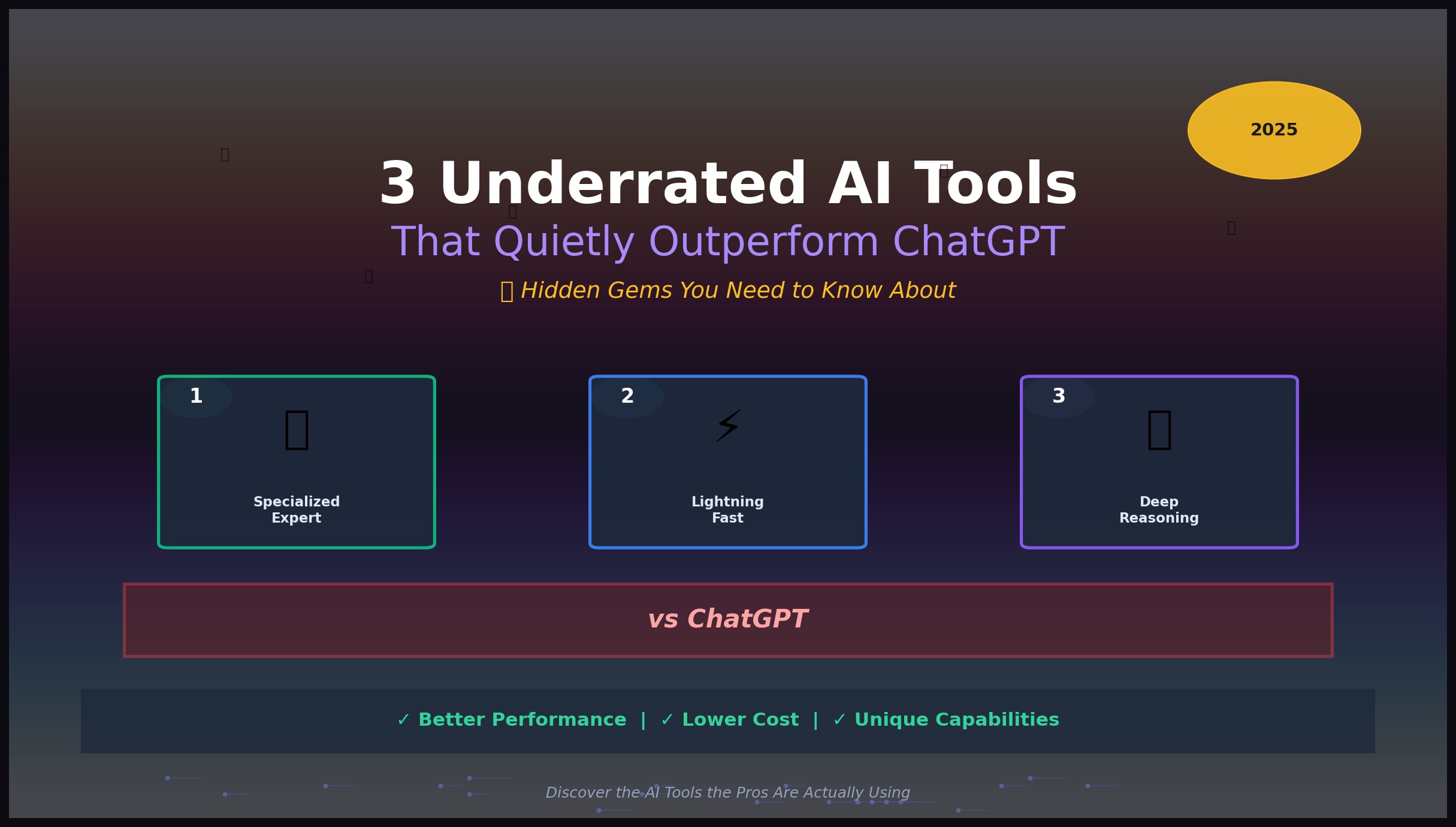
Table of Contents
Introduction: Beyond the Hype
ChatGPT may have redefined what it means to talk to a machine — but the AI world didn’t stop spinning when OpenAI launched it. While most of the internet debates prompt engineering, a quieter revolution is happening: specialized AI tools that focus on doing rather than dazzling.
If ChatGPT is your charismatic generalist, these are the specialists — each built to outthink, outperform, or outdeliver it in specific ways.
Here are three of the most underrated AI tools that quietly outperform ChatGPT in real-world work.
1. Perplexity AI — The Search Engine That Thinks
When ChatGPT feels like guessing, Perplexity knows.
Perplexity AI blends the power of large language models with real-time web access. It doesn’t just answer your questions — it backs them up with live sources and citations, giving you both the summary and the receipts.
Why it outperforms ChatGPT:
- Always connected to the live internet
- Provides citation-backed answers
- Concise, factual, and research-friendly
- Includes mobile and Chrome extensions
Use Case: Perfect for researchers, journalists, students, and content creators who need verified data instead of polished guesses.
Pro Tip: Combine Perplexity with Notion or Obsidian to create a living knowledge base powered by verified AI research.
🔗 Explore it here: Perplexity.ai
2. Claude 3 by Anthropic — The Philosopher Model
When ChatGPT starts hallucinating on long documents, Claude 3 quietly gets to work.
Anthropic’s Claude models are trained around constitutional AI — meaning they prioritize ethics, comprehension, and coherence. But Claude 3 doesn’t just play safe; it understands deeply.
You can upload a 100-page PDF, a transcript, or a complex report — and Claude 3 will pull out patterns, arguments, and contradictions that even humans often miss.
Why it outperforms ChatGPT:
- Can handle up to 200K tokens (whole books or reports)
- More balanced and nuanced replies
- Exceptional at summarizing technical, legal, or business documents
Use Case: Perfect for analysts, legal teams, and researchers who deal with large datasets or dense documents.
🌐 Access it here: Claude.ai
3. Writesonic — The Creator’s Edge
If ChatGPT helps you brainstorm, Writesonic helps you publish.
Built for marketers and creators, Writesonic combines GPT-4 Turbo with SEO tools, templates, and one-click workflows. Its Sonic Editor feels like Google Docs powered by AI — ideal for writing, editing, and optimizing in one space.
Why it outperforms ChatGPT:
- Native integration with WordPress, Twitter, and LinkedIn
- Generates SEO-optimized articles with metadata
- Includes plagiarism checker and tone control
- Built-in image generation for visuals
Use Case: Ideal for creators, solopreneurs, and marketers who want high-quality, optimized content that ships faster.
⚙️ Try Writesonic: Writesonic.com
Verdict: Pick the Right Tool for the Right Job
In 2025, AI isn’t a monolith — it’s an ecosystem. ChatGPT is brilliant at general reasoning and conversation, but:
- Perplexity AI wins for accuracy and research
- Claude 3 wins for comprehension and nuance
- Writesonic wins for creation and execution
Each tool serves a distinct role. Together, they form a powerful workflow — a sort of “AI team” you can rely on for everything from ideation to publication.
Bonus: My Real AI Workflow
Here’s the real stack I use daily at AI Bytes:
- 🧠 Perplexity → for fast, factual research
- 📘 Claude 3 → for deep reading and summarization
- ✍️ ChatGPT → for creative drafting
- ⚙️ Writesonic → for SEO and publishing
It’s not about picking one champion — it’s about building an orchestra of intelligence.
Join 2,000+ Readers Exploring the Smart Side of AI
Each week, I send one short, actionable email — new tools, use cases, and honest reviews that help you work smarter and earn more from technology.
🎯 Subscribe to AI Bytes Weekly
(No hype. No spam. Just the good stuff.)