AI Content Auditing Tools for WordPress
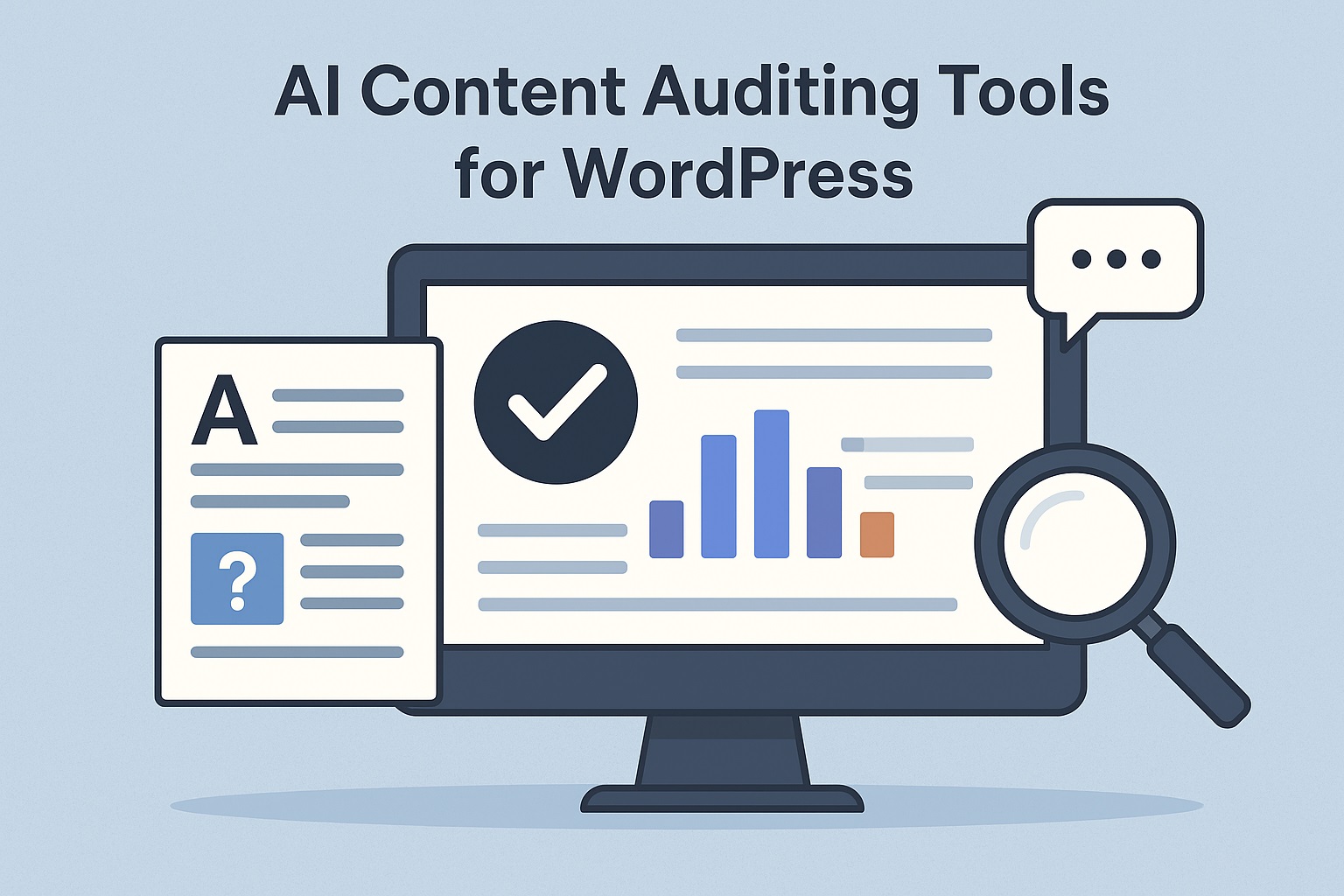
Table of Contents
In today's digital landscape, content is king, but maintaining high-quality, SEO-optimized content across a WordPress site requires more than just good writing—it demands systematic auditing and continuous optimization. With the rise of artificial intelligence, content auditing has evolved from manual, time-consuming processes to sophisticated, automated systems that can analyze, optimize, and improve your content at scale.
This comprehensive guide explores the best AI content auditing tools available for WordPress sites in 2025, with a special focus on how these technologies can transform your SEO strategy and drive measurable results.
What is Content Auditing and Why is it Critical?
Content auditing is a systematic process of evaluating all the content on your website to assess its performance against business objectives . It's essentially a health check for your content strategy that helps you identify:
- High-performing content that should be promoted further
- Underperforming content that needs optimization or removal
- Content gaps where opportunities exist for new material
- Technical issues affecting search engine visibility
- User experience problems impacting engagement and conversions
When Should You Conduct Content Audits?
Research indicates that the frequency of content audits should align with your content volume and business needs:
- High-volume content sites (blogs, news sites): Quarterly audits
- Regular content publishers: Every 6-12 months
- Before website redesigns: Essential for content migration decisions
- After Google algorithm updates: To assess impact and adapt strategies
- During traffic drops: Immediate diagnostic action
- For competitive analysis: Ongoing market positioning
- When onboarding new clients: Establishing benchmarks and priorities
The Evolution of Content Auditing: From Manual to AI-Powered
Traditional content auditing involved manually reviewing each piece of content, checking metrics one by one, and making subjective judgments about quality and performance. This approach was:
- Time-intensive: Taking hours or days for large sites
- Prone to human error: Missing critical issues or overlooking opportunities
- Inconsistent: Different evaluators applying different standards
- Limited in scope: Focusing mainly on obvious metrics like traffic and rankings
AI-powered content auditing tools have revolutionized this process by:
- Automating data collection across multiple metrics and platforms
- Providing objective analysis based on predefined algorithms and best practices
- Identifying patterns and insights that humans might miss
- Scaling analysis across thousands of pieces of content efficiently
- Offering predictive insights to guide future content strategy
Comprehensive Review of Top AI Content Auditing Tools
1. RankMath: The Most Complete AI-Powered SEO Suite
Overview: RankMath stands out as the most comprehensive AI content auditing and SEO optimization platform for WordPress, offering an unmatched combination of features, ease of use, and advanced AI capabilities.
Core Content Auditing Features
Advanced Content Analysis Engine
RankMath's built-in SEO analysis tool evaluates your content against 40+ ranking factors, providing detailed insights and actionable recommendations . The system analyzes:
- Keyword optimization and density
- Content structure and readability
- Meta tag optimization
- Internal and external linking
- Image SEO and accessibility
- Schema markup implementation
- Page speed and technical performance
Content AI: Your Personal SEO Assistant
RankMath's Content AI represents a breakthrough in AI-powered content optimization. This comprehensive suite includes:
- 40+ AI Tools for content creation, optimization, and auditing
- 125+ Curated AI Prompt Templates for various content types
- RankBot: A dedicated AI assistant for SEO-specific queries
- Multi-language support across 30+ languages
- WordPress integration with Block Editor, Classic Editor, Elementor, and Divi
Automated Content Performance Tracking
The platform provides continuous monitoring through:
- Google Search Console Integration: Direct access to search analytics within WordPress
- Rank Tracking: Monitor keyword positions across search engines
- Position History: Track ranking changes over time
- Performance Email Reports: Automated insights delivered to your inbox
- 404 Monitor: Identify and resolve broken links affecting user experience
Unique Advantages of RankMath
Comprehensive Schema Support
RankMath offers the most advanced schema generator available, supporting 840+ schema types including specialized formats for:
- Local businesses (193 specific types)
- E-commerce products
- Events and venues
- FAQ and How-to structures
- Video content optimization
- Recipe and review schemas
AI-Powered Content Optimization
The Content AI system can:
- Generate SEO-optimized meta titles and descriptions in bulk
- Create comprehensive blog post outlines
- Suggest relevant internal linking opportunities
- Optimize images with AI-generated ALT text
- Analyze competitor content for optimization opportunities
- Provide real-time content scoring as you write
Advanced Technical SEO Features
- Automated XML Sitemaps: Customizable for different content types
- 404 Error Management: Both simple and advanced monitoring with redirect capabilities
- Internal Linking Automation: AI-powered suggestions for linking opportunities
- Image SEO Automation: Automatic ALT text and title optimization
- Social Media Optimization: Open Graph and Twitter Card optimization
Pricing and Value Proposition
RankMath offers exceptional value with both free and paid options:
Free Plan:
- Comprehensive SEO analysis for unlimited websites
- Basic content auditing features
- Google Analytics and Search Console integration
- Support for multiple website builders
Paid Plans (with significant Black Friday discounts active):
- Starter: $4.08/month (annually) - 7,500 monthly Content AI credits
- Creator: $7.99/month (annually) - 18,000 monthly Content AI credits
- Expert: $10.99/month (annually) - 45,000 monthly Content AI credits
All paid plans include unlimited websites, 24/7 support, and comprehensive AI tools.
2. AIOSEO: User-Friendly SEO with AI Writing Assistant
Overview: AIOSEO (All in One SEO) focuses on ease of use while incorporating AI-powered content optimization features.
Key Features:
- TruSEO On-Page Analysis for real-time optimization suggestions
- AI Writing Assistant powered by SEOBoost for content creation
- Google Search Console integration for performance tracking
- Author SEO module for E-E-A-T optimization
- Social media optimization tools
Strengths:
- Most beginner-friendly interface
- Comprehensive social media integration
- Strong focus on user experience
Limitations:
- Less comprehensive schema support compared to RankMath
- Limited AI tools compared to dedicated content AI platforms
- Higher pricing for advanced features
3. Yoast SEO: The Established Player
Overview: Yoast SEO is the most established WordPress SEO plugin with a focus on content analysis and readability.
Key Features:
- Comprehensive readability analysis
- Basic schema markup support
- XML sitemap generation
- Internal linking suggestions
- Breadcrumb navigation
Strengths:
- Largest user base and community support
- Excellent readability analysis
- Strong brand recognition
Limitations:
- Outdated interface compared to newer competitors
- Limited AI-powered features
- Basic schema capabilities
- Higher cost for premium features
4. SurferSEO: Advanced Content Optimization Platform
Overview: SurferSEO is a dedicated content optimization platform that provides in-depth analysis and recommendations.
Key Features:
- SERP analyzer for competitor analysis
- Content editor with real-time optimization
- Keyword research and clustering
- Content planner and strategy tools
- Integration with popular CMS platforms
Strengths:
- Sophisticated content optimization algorithms
- Strong competitor analysis capabilities
- Comprehensive keyword research tools
Limitations:
- Primarily external platform (not WordPress-native)
- Higher learning curve
- Expensive for small businesses
- Limited WordPress integration
5. Clearscope: Content Quality and Keyword Relevance
Overview: Clearscope focuses on content quality optimization and keyword relevance scoring.
Key Features:
- Real-time content optimization suggestions
- Keyword gap analysis
- Content scoring based on search intent
- Competitor content analysis
- Integration with Google Docs and WordPress
Strengths:
- Excellent content quality analysis
- User-friendly interface
- Strong focus on search intent matching
Limitations:
- Limited technical SEO features
- Primarily focused on content creation rather than auditing
- Higher pricing tiers
- Less comprehensive than full SEO suites
6. MarketMuse: AI-Powered Content Strategy
Overview: MarketMuse provides AI-driven content strategy and optimization recommendations.
Key Features:
- Content inventory analysis
- Topic modeling and clustering
- Competitive content analysis
- Content gap identification
- Strategic content planning tools
Strengths:
- Comprehensive content strategy tools
- Strong AI-powered insights
- Effective content gap analysis
Limitations:
- Complex interface for beginners
- Limited WordPress integration
- Expensive for small to medium businesses
- Focus on strategy over implementation
Content Auditing Best Practices for 2025
The 7-Step Content Audit Framework
Based on current best practices and AI capabilities, here's a proven framework for conducting comprehensive content audits:
Step 1: Define Clear Objectives
Start by establishing specific goals for your content audit:
- SEO Goals: Improve search rankings, increase organic traffic
- Engagement Goals: Reduce bounce rate, increase time on page
- Conversion Goals: Generate more leads, sales, or sign-ups
- Technical Goals: Improve page speed, fix crawl errors
Step 2: Create a Comprehensive Content Inventory
Use AI tools to automatically generate a master spreadsheet containing:
- URLs and Page Types: Posts, pages, product pages, category pages
- Content Metadata: Titles, meta descriptions, focus keywords
- Performance Metrics: Organic traffic, rankings, backlinks
- Technical Data: Page speed, mobile-friendliness, crawl status
- Business Data: Conversion rates, revenue attribution
RankMath can automate much of this process through its built-in analytics module .
Step 3: Analyze Content Performance
Evaluate each piece of content across multiple dimensions:
SEO Performance:
- Keyword rankings and search visibility
- Organic traffic trends
- Backlink profile and authority
- Click-through rates from search results
User Engagement:
- Time on page and bounce rate
- Social shares and engagement
- User journey and conversion paths
- Mobile vs desktop performance
Technical Health:
- Page loading speed
- Mobile responsiveness
- Schema markup implementation
- Internal linking structure
Step 4: Assess Content Quality and Relevance
Use AI tools to evaluate content against current standards:
Content Freshness:
- Publication and last update dates
- Accuracy of information
- Relevance to current trends
- Alignment with user search intent
Readability and Structure:
- Content length and depth
- Readability scores
- Header structure and organization
- Multimedia integration
Search Intent Alignment:
- How well content matches user queries
- Presence of featured snippet opportunities
- Long-tail keyword coverage
- Question-based content optimization
Step 5: Identify Content Opportunities
Leverage AI to discover optimization opportunities:
Content Gaps:
- Missing topics your competitors cover
- Underserved keyword clusters
- Seasonal or trending topic opportunities
- User question and answer opportunities
Technical Improvements:
- Schema markup enhancements
- Internal linking optimization opportunities
- Image and multimedia optimization needs
- Page speed improvement potential
Step 6: Prioritize and Plan Actions
Categorize content for strategic decision-making:
Keep (High Performers):
- Content with strong rankings and engagement
- Pages driving significant organic traffic
- Evergreen content with consistent performance
Update (Optimization Opportunities):
- High-traffic but underperforming content
- Outdated content with good potential
- Pages close to ranking success
Consolidate (Content Efficiency):
- Similar content covering the same topics
- Thin content that could be combined
- Cannibalizing content competing for same keywords
Delete (Low Value):
- Content with consistently low performance
- Outdated or irrelevant information
- Pages with high bounce rates and low engagement
Step 7: Implement Changes and Monitor Results
Execute your optimization plan with continuous monitoring:
Implementation:
- Update underperforming content based on AI recommendations
- Implement technical improvements
- Optimize internal linking structure
- Enhance schema markup
Monitoring:
- Track ranking improvements
- Monitor traffic and engagement changes
- Measure conversion rate impacts
- Regular performance reporting
How AI Content Auditing Tools Transform WordPress Sites
Automated Technical SEO Monitoring
Modern AI tools like RankMath continuously monitor your WordPress site for technical issues that could impact search performance:
404 Error Detection and Management
- Automatic detection of broken links and missing pages
- Intelligent redirect suggestions based on content similarity
- Detailed logging of error sources and user paths
- Bulk resolution capabilities for large-scale issues
Page Speed Optimization
- Real-time monitoring of page loading performance
- Identification of speed-impacting elements
- Automated optimization suggestions
- Integration with caching and CDN services
Mobile-Friendliness Auditing
- Continuous mobile usability testing
- Responsive design validation
- Touch-friendly interface verification
- Mobile-specific SEO factor analysis
Intelligent Content Optimization
AI-powered content auditing goes beyond basic keyword optimization to provide comprehensive improvements:
Search Intent Optimization
- Analysis of user search behavior and intent
- Content structure recommendations for different query types
- Featured snippet optimization strategies
- Voice search and semantic search preparation
Content Structure Enhancement
- Header hierarchy optimization
- Paragraph length and readability improvements
- Multimedia integration suggestions
- Internal linking strategy development
Schema Markup Automation
- Automatic structured data generation
- Rich snippet optimization
- Local business schema implementation
- E-commerce product schema optimization
Predictive Analytics and Trend Identification
Advanced AI tools can forecast content performance and identify emerging opportunities:
Trend Prediction
- Google Trends integration for topic validation
- Seasonal content opportunity identification
- Emerging keyword discovery
- Competitive landscape analysis
Performance Forecasting
- Traffic prediction based on optimization changes
- Ranking improvement potential assessment
- Conversion rate impact estimation
- ROI calculation for content investments
Implementing AI Content Auditing: A Practical Guide
Getting Started with RankMath
Step 1: Installation and Basic Setup
1. Install RankMath SEO plugin from WordPress repository
2. Run the setup wizard to configure basic settings
3. Connect Google Analytics and Search Console
4. Set up XML sitemaps and basic schema markup
Step 2: Content Analysis and Scoring
1. Enable Content AI module for advanced features
2. Run site-wide SEO analysis using the 40-factor audit
3. Review individual content scores and recommendations
4. Identify high-priority optimization opportunities
Step 3: AI-Powered Content Creation
1. Use Content AI for new content development
2. Leverage RankBot for SEO-specific questions and strategies
3. Implement AI-generated meta tags and descriptions
4. Optimize existing content using AI suggestions
Step 4: Ongoing Monitoring and Optimization
1. Set up automated performance reports
2. Monitor 404 errors and redirect performance
3. Track ranking improvements over time
4. Continuously update content based on AI insights
Content Audit Workflow Integration
Daily Monitoring:
- Check RankMath dashboard for urgent issues
- Monitor ranking changes for priority keywords
- Review 404 error logs and address critical broken links
Weekly Analysis:
- Review performance reports for traffic trends
- Analyze top-performing and underperforming content
- Update content based on AI recommendations
Monthly Audits:
- Conduct comprehensive content performance review
- Update optimization strategies based on search algorithm changes
- Plan new content based on gap analysis findings
Quarterly Deep Dives:
- Complete site-wide content audit using full framework
- Analyze competitive positioning and strategy adjustments
- Evaluate ROI of content optimization efforts
Measuring Success: Key Performance Indicators
Essential Metrics for Content Auditing ROI
SEO Performance Metrics:
- Organic Traffic Growth: Percentage increase in non-paid search traffic
- Keyword Ranking Improvements: Average position gains for target keywords
- Featured Snippet Captures: Number of featured snippet positions achieved
- Click-Through Rates: Improvement in search result click-through rates
Engagement Metrics:
- Time on Page: Increased average session duration
- Bounce Rate Reduction: Lower bounce rates indicating improved relevance
- Page Views per Session: More pages viewed during average visits
- Social Shares: Increased content sharing across social platforms
Technical Performance Metrics:
- Page Speed Improvements: Faster loading times across device types
- Mobile Usability Scores: Better mobile experience ratings
- Crawl Error Reduction: Fewer technical issues affecting search crawling
- Schema Markup Coverage: Increased structured data implementation
Business Impact Metrics:
- Lead Generation: More qualified leads from organic search
- Conversion Rate Improvements: Better conversion from traffic to goals
- Revenue Attribution: Direct sales attributable to optimized content
- Customer Acquisition Cost: Reduced cost per organic customer acquisition
Future Trends in AI Content Auditing
Emerging Technologies and Capabilities
Advanced Natural Language Processing (NLP)
- More sophisticated understanding of content context and meaning
- Better semantic search optimization
- Enhanced voice search content optimization
- Improved multilingual content analysis
Predictive Content Performance Modeling
- AI-powered prediction of content success before publication
- Automated A/B testing for content optimization
- Dynamic content adjustment based on real-time performance data
- Integration with user behavior analytics for personalization
Enhanced User Intent Understanding
- Deeper analysis of search intent beyond basic keyword matching
- Content optimization for complex query types
- Better preparation for AI-powered search engines
- Integration with chatbot and voice assistant optimization
Preparing for the Future
Technical Infrastructure:
- Ensure your WordPress site can handle advanced AI tools
- Invest in fast hosting and CDN services
- Maintain clean, well-structured data for AI analysis
- Stay updated with WordPress core and plugin developments
Content Strategy Evolution:
- Develop processes for rapid content adaptation
- Create templates for AI-assisted content creation
- Build expertise in interpreting AI-generated insights
- Foster collaboration between content creators and technical SEO experts
Continuous Learning and Adaptation:
- Stay informed about AI developments in SEO
- Regularly update optimization strategies based on search engine changes
- Test new AI tools and features as they become available
- Maintain flexibility in content approaches to adapt to algorithm updates
Conclusion: The Competitive Advantage of AI-Powered Content Auditing
The landscape of content marketing and SEO has fundamentally shifted in 2025. Websites that embrace AI-powered content auditing tools, particularly comprehensive platforms like RankMath, gain significant competitive advantages through:
Efficiency Gains: Automated analysis that would take humans hours or days can be completed in minutes, allowing more time for strategic planning and creative content development.
Data-Driven Decisions: AI provides objective, comprehensive analysis based on hundreds of ranking factors, eliminating guesswork and personal bias from optimization decisions.
Continuous Optimization: Unlike periodic manual audits, AI tools provide ongoing monitoring and real-time optimization suggestions, ensuring content remains competitive as algorithms and user behaviors evolve.
Scalability: AI-powered tools can effectively manage content auditing for sites with thousands of pages, making enterprise-level optimization accessible to businesses of all sizes.
Future-Proofing: As search engines become more sophisticated and AI-driven, sites that already use AI for content optimization will be better positioned to adapt to future algorithm changes.
Why RankMath Stands Out
Among the available options, RankMath emerges as the most comprehensive solution for WordPress content auditing due to its:
-
Integrated AI Approach: Unlike tools that require multiple plugins or external platforms, RankMath provides everything within one WordPress installation.
-
Advanced Content AI: With 40+ AI tools and 125+ prompt templates, it offers the most extensive AI-powered content creation and optimization suite available.
-
Comprehensive Technical SEO: Beyond content analysis, it handles schema markup, internal linking, 404 management, and performance monitoring.
-
Exceptional Value: The free plan provides substantial capabilities, while paid plans offer enterprise-level features at competitive pricing.
-
WordPress-First Design: Built specifically for WordPress users, it integrates seamlessly with popular page builders and themes.
-
Continuous Innovation: Regular updates and new features ensure the platform stays current with SEO best practices and algorithm changes.
Getting Started Today
Whether you're managing a personal blog, small business website, or enterprise-level WordPress installation, implementing AI-powered content auditing tools should be a priority in 2025. The competitive advantages gained through automated optimization, comprehensive analysis, and continuous monitoring will compound over time, leading to:
- Improved search engine rankings
- Increased organic traffic and engagement
- Better user experience and conversion rates
- More efficient content marketing operations
- Future-ready optimization strategies
Start with a free tool like RankMath's basic features to experience the benefits firsthand, then scale to more advanced AI capabilities as you see results. The investment in AI content auditing tools pays for itself through improved search performance, increased organic traffic, and more efficient content operations.
Ready to transform your WordPress content strategy? Visit RankMath to begin your AI-powered content auditing journey today.
This comprehensive guide represents the latest understanding of AI content auditing tools as of November 2025. Search engine algorithms and SEO best practices continue to evolve, so regular updates to your optimization strategies remain essential for continued success.