Best Generative AI Tools for Marketing Content Automation in 2025
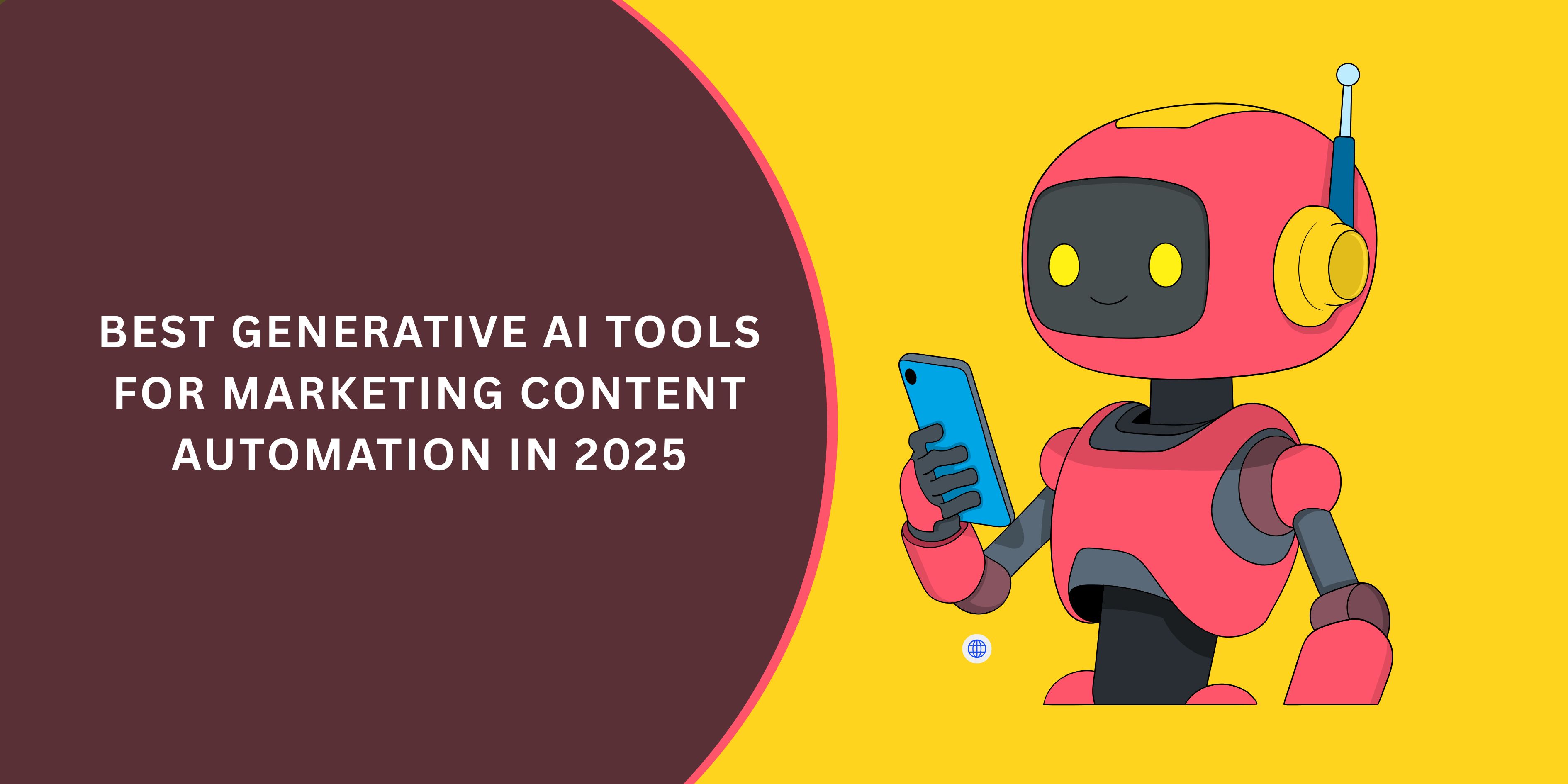
Table of Contents
Introduction: The AI Revolution in Marketing.
In 2025, generative AI tools for marketing content automation have transformed from experimental technologies to essential business solutions. With the global generative AI market projected to reach $356.10 billion by 2030, businesses that fail to leverage these tools risk falling behind their competitors significantly.
Marketing teams worldwide are discovering that AI-powered content automation doesn't just save time—it revolutionizes entire workflows, enabling marketers to scale content production while maintaining quality and brand consistency. From small startups to enterprise corporations, organizations are using these tools to automate repetitive tasks, generate high-quality content at scale, and make data-driven decisions faster than ever before.
This comprehensive guide explores the best generative AI tools for marketing content automation in 2025, providing you with actionable insights to transform your marketing operations and achieve unprecedented efficiency.
What Are Generative AI Tools and Why They Matter.
Understanding Generative AI Technology
Generative AI tools are advanced artificial intelligence systems designed to create entirely new content rather than simply analyzing existing information. These tools are trained on massive datasets encompassing text, images, code, audio, and video, learning underlying patterns and relationships to produce original outputs that mimic human creativity and expertise.
The technology works through three fundamental processes:
- Training on Massive Datasets: AI models analyze vast amounts of data to form foundational knowledge
- Learning the Rules: Complex algorithms identify patterns, relationships, and stylistic nuances
- Generating New Outputs: The trained models create original content based on user prompts and parameters
Why Marketing Teams Need AI Content Automation
The adoption of AI marketing tools in 2025 isn't just a trend—it's a strategic necessity. Here's why:
- Enhanced Efficiency: Automate repetitive tasks, freeing valuable time for strategic thinking
- Boosted Creativity: Overcome creative blocks and generate innovative content ideas
- Improved Decision-Making: Analyze vast datasets for data-driven marketing strategies
- Personalized Experiences: Tailor content to individual customer preferences
- Cost Reduction: Streamline processes and minimize errors across marketing campaigns
Top Generative AI Tools for Content Automation
The AI Marketing Landscape in 2025
Our extensive research and testing of over 26 AI marketing tools reveals that successful content automation requires a strategic combination of specialized tools rather than a single universal solution. Based on our analysis, here are the top-performing categories and individual tools:
Content Creation AI Tools
1. Jasper AI - The Premium Choice for Marketing Teams
Jasper AI stands out as one of the most sophisticated generative AI tools for marketing in 2025, offering enterprise-grade features that justify its premium pricing
Key Features: - 100+ content templates for diverse marketing needs - Brand Voice technology that learns your company's tone - Integration with Surfer SEO for optimized content - Real-time collaboration features for marketing teams - Plagiarism detection and grammar checking
Pricing Structure: - Creator Plan: $49/month (limited features) - Pro Plan: $69/month (enhanced capabilities) - Business Plan: Custom pricing (full features and integrations)
Best Use Cases: - Long-form content creation (blog posts, whitepapers) - Brand-consistent social media content - Email marketing campaigns - Product descriptions and marketing copy
Why Choose Jasper: The platform excels at maintaining brand consistency across all content types, making it ideal for established businesses with defined brand voices.
2. Writesonic - The Feature-Rich Alternative
Writesonic offers comprehensive AI content generation with advanced automation features that rival enterprise solutions.
Key Features: - AI agents for specialized workflows (SEO, LinkedIn, Content) - Built-in SEO optimization tools - Automated internal linking and content gap analysis - Generative Engine Optimization (GEO) for AI platform visibility - Integration with Ahrefs for accurate keyword data
Pricing Structure: - Free Plan: Available with limitations - Lite Plan: $49/month - Small Teams Plan: $99/month - Professional Plan: $249/month - Advanced Plan: $499/month
SEO Advantages: Writesonic's built-in SEO tools and GEO features make it particularly valuable for content marketers focused on search engine visibility.
3. Copy.ai - The Sales and Marketing Specialist
Copy.ai specializes in sales and marketing content generation, offering powerful automation for lead nurturing and customer engagement.
Key Features: - End-to-end marketing automation - Custom tone and voice options - CRM integration capabilities - Lead scoring and qualification - Multi-language content generation
Best For: B2B companies focusing on sales enablement and lead generation workflows.
SEO Optimization AI Tools
4. Surfer SEO - The Content Optimization Leader
Surfer SEO revolutionizes content optimization by providing real-time SEO scoring and actionable recommendations.
Key Features: - Real-time SEO scoring during content creation - Keyword density optimization - Content outline generation based on top-ranking pages - Integration with popular content creation tools - Automated content gap analysis
Client Success: Used by major brands including FedEx, Shopify, and Viacom, proving its effectiveness at scale.
5. ContentShake AI - The All-in-One SEO Solution
ContentShake AI combines Semrush's keyword data with LLM-powered writing to create optimized content that ranks.
Key Features: - Combines Semrush data with AI writing - Multi-language content generation - Brand voice customization - One-click readability improvements - Direct publishing to WordPress and Google Docs
Automation Benefits: Automates the entire SEO content creation process from topic ideation to publishing.
Marketing Automation AI Platforms {#automation-tools}
6. Gumloop - The Automation Powerhouse
Gumloop transforms workflow automation by adding AI capabilities to traditional automation platforms.
Key Features: - Built-in access to latest AI models (GPT-4, Claude, Grok) - No API keys required for premium LLMs - Powerful web scraping capabilities - Continuous AI agents for real-time automation - Modern, intuitive user interface
Why It's Revolutionary: Gumloop eliminates the complexity of AI integration while providing powerful automation capabilities used by companies like Webflow and Instacart.
7. Zapier - The Integration Champion
Zapier continues to dominate the automation space with enhanced AI capabilities in 2025.
Key Features: - 3,000+ app integrations - AI-powered workflow interpretation - Conditional logic and branching workflows - Template library for quick setup - Advanced automation with minimal coding
Best Use Cases: Connecting various marketing tools for seamless content workflows and automated distribution.
Visual Content AI Solutions
8. Midjourney - The Creative Powerhouse
Midjourney excels at generating highly realistic and creative images for marketing materials.
Key Features: - Ultra-realistic image generation - Extensive style and material controls - Discord-based collaboration - Continuous model improvements - Professional-quality output
Pricing: Starting at $10/month with various subscription tiers.
9. Lexica Art - The Marketing-Focused Image Generator
Lexica Art specializes in creating realistic AI images specifically optimized for marketing content.
Key Features: - High-quality, realistic image generation - Prompt saving for brand consistency - Marketing-focused templates - Commercial-use licensing
Perfect For: Blog thumbnails, social media posts, and marketing campaigns requiring consistent visual branding.
How to Choose the Right AI Tools for Your Business
Strategic Selection Framework
Choosing the right generative AI tools for marketing content automation requires careful consideration of multiple factors:
1. Define Your Primary Objectives
Start by identifying your core goals: - Content Volume: Do you need to scale content production significantly? - Quality Requirements: What's your tolerance for AI-generated content vs. human refinement? - SEO Focus: Are you prioritizing search engine optimization? - Brand Consistency: How important is maintaining a unified brand voice? - Team Collaboration: Do you need multi-user capabilities?
2. Evaluate Tool Features and Capabilities
Compare key features across potential tools: - Content Types Supported: Blog posts, social media, email, video scripts - Integration Options: CRM, CMS, SEO tools, analytics platforms - Customization Options: Brand voice, tone adjustment, style guides - Scalability: Ability to handle increased workload - Support and Training: Available resources for team adoption
3. Consider Pricing and ROI
Cost-Effectiveness Analysis: - Entry-Level Tools ($20-50/month): Suitable for small teams or specific use cases - Professional Tools ($50-150/month): Balanced features for growing businesses - Enterprise Solutions ($150+/month): Advanced features for large organizationson>
4. Test Before Committing
- Utilize free trials and freemium plans
- Test multiple tools simultaneously
- Gather team feedback during trial periods
- Evaluate output quality against your standards
Recommended Tool Combinations by Business Size
Small Businesses (1-10 employees): - ChatGPT or Claude for general content creation - Surfer SEO for optimization - Zapier for basic automation - Grammarly for content editing
Medium Businesses (10-100 employees): - Jasper AI or Writesonic for content creation - ContentShake AI for SEO-focused content - Gumloop for advanced automation - Midjourney for visual contentation>
Large Enterprises (100+ employees): - Enterprise plans from Jasper or Writesonic - Custom AI solutions with dedicated APIs - Full marketing automation suites - Specialized tools for each content typeation>
Future Trends in AI Marketing Tools
Emerging Technologies and Capabilities
1. Advanced Personalization at Scale
Generative AI tools in 2025 are moving beyond generic content creation to hyper-personalized marketing experiences. Tools are now capable of: - Generating unique content variations for different customer segments - Adapting brand voice based on target audience demographics - Creating dynamic product descriptions based on user behavioron>
2. Multi-Modal Content Generation
The integration of text, image, video, and audio generation capabilities within single platforms is becoming standard. This allows marketers to: - Create consistent brand messages across all content formats - Automatically adapt content for different platforms - Generate video scripts, visuals, and audio simultaneouslyon>
3. Real-Time Content Optimization
AI tools are increasingly capable of: - Adjusting content based on real-time performance data - Automatically A/B testing different content variations - Optimizing posting schedules and channels
4. Enhanced Privacy and Compliance
With increasing data protection regulations, AI tools are implementing: - Built-in GDPR compliance features - Data encryption and secure processing - Transparent AI usage disclosures
Industry Predictions for 2025-2026
Market Growth: The AI marketing tools sector is expected to grow exponentially, with more businesses adopting comprehensive AI strategies rather than isolated tool implementations.
Consolidation: We anticipate mergers and acquisitions leading to more comprehensive platforms that integrate multiple AI capabilities.
Democratization: Advanced AI features will become accessible to smaller businesses through simplified interfaces and more affordable pricing models.
Implementation Strategy and Best Practices
Building Your AI-Powered Marketing Stack
Phase 1: Foundation (Months 1-2)
- Audit Current Processes: Identify repetitive tasks suitable for automation
- Select Core Tools: Choose 2-3 primary tools based on immediate needs
- Train Your Team: Ensure all team members understand tool capabilities and limitations
- Establish Guidelines: Create content standards and brand voice documentation.
Phase 2: Expansion (Months 3-6)
- Add Specialized Tools: Introduce tools for specific use cases (SEO, visual content)
- Implement Workflows: Create automated processes for content distribution
- Measure Performance: Track ROI and efficiency gains
- Refine Processes: Optimize workflows based on initial results
Phase 3: Optimization (Months 6-12)
- Advanced Integration: Connect AI tools with existing marketing technology stack
- Custom Development: Build custom solutions for unique requirements
- Scale Operations: Expand automation to all applicable marketing processes
- Continuous Improvement: Regularly evaluate and update tool selections
Best Practices for AI Content Automation
Quality Control
- Always review AI-generated content before publishing
- Maintain human oversight for brand-sensitive content
- Use AI detection tools to ensure content authenticity
- Regularly update brand guidelines for AI tools
Team Integration
- Provide comprehensive training on chosen tools
- Encourage experimentation and learning
- Establish clear roles and responsibilities
- Foster collaboration between content creators and AI tools
Performance Monitoring
- Track content performance metrics regularly
- Monitor team productivity improvements
- Assess cost savings from automation
- Gather customer feedback on AI-generated content
Ethical Considerations
- Disclose AI usage when appropriate
- Ensure content accuracy and fact-checking
- Maintain human creativity and strategic thinking
- Respect intellectual property rights
Conclusion
The landscape of generative AI tools for marketing content automation in 2025 offers unprecedented opportunities for businesses to transform their marketing operations. From established leaders like Jasper AI and Writesonic to innovative newcomers like Gumloop, the right combination of tools can revolutionize how you create, optimize, and distribute content.
Key Takeaways
- Strategic Selection is Crucial: Choose tools based on specific business needs rather than following trends
- Integration Matters More Than Individual Features: Focus on how tools work together in your workflow
- Human Oversight Remains Essential: AI augments human capabilities rather than replacing them
- Continuous Learning is Required: The AI landscape evolves rapidly, requiring ongoing adaptation
Your Next Steps
- Audit Your Current Marketing Processes: Identify areas where AI automation could provide immediate value
- Start with Free Trials: Test 2-3 tools simultaneously to find the best fit for your team
- Invest in Team Training: Ensure your marketing team understands both capabilities and limitations of AI tools
- Plan for Growth: Choose tools that can scale with your business needs
The future of marketing belongs to teams that can effectively leverage generative AI tools for content automation while maintaining the creativity and strategic thinking that only humans can provide. By following the insights and recommendations in this guide, you'll be well-positioned to lead your industry in AI-powered marketing excellence.
Remember: The best AI marketing tools are those that seamlessly integrate into your existing workflows while providing measurable improvements in efficiency, quality, and ROI. Start small, measure results, and scale your AI-powered marketing operations strategically.
This comprehensive guide represents the latest insights into generative AI tools for marketing content automation as of 2025. The landscape continues to evolve rapidly, so we recommend regularly reviewing tool capabilities and pricing to ensure you're always using the most effective solutions for your marketing needs.