Best VPN Free and Paid: Secure Your Online Privacy in 2026
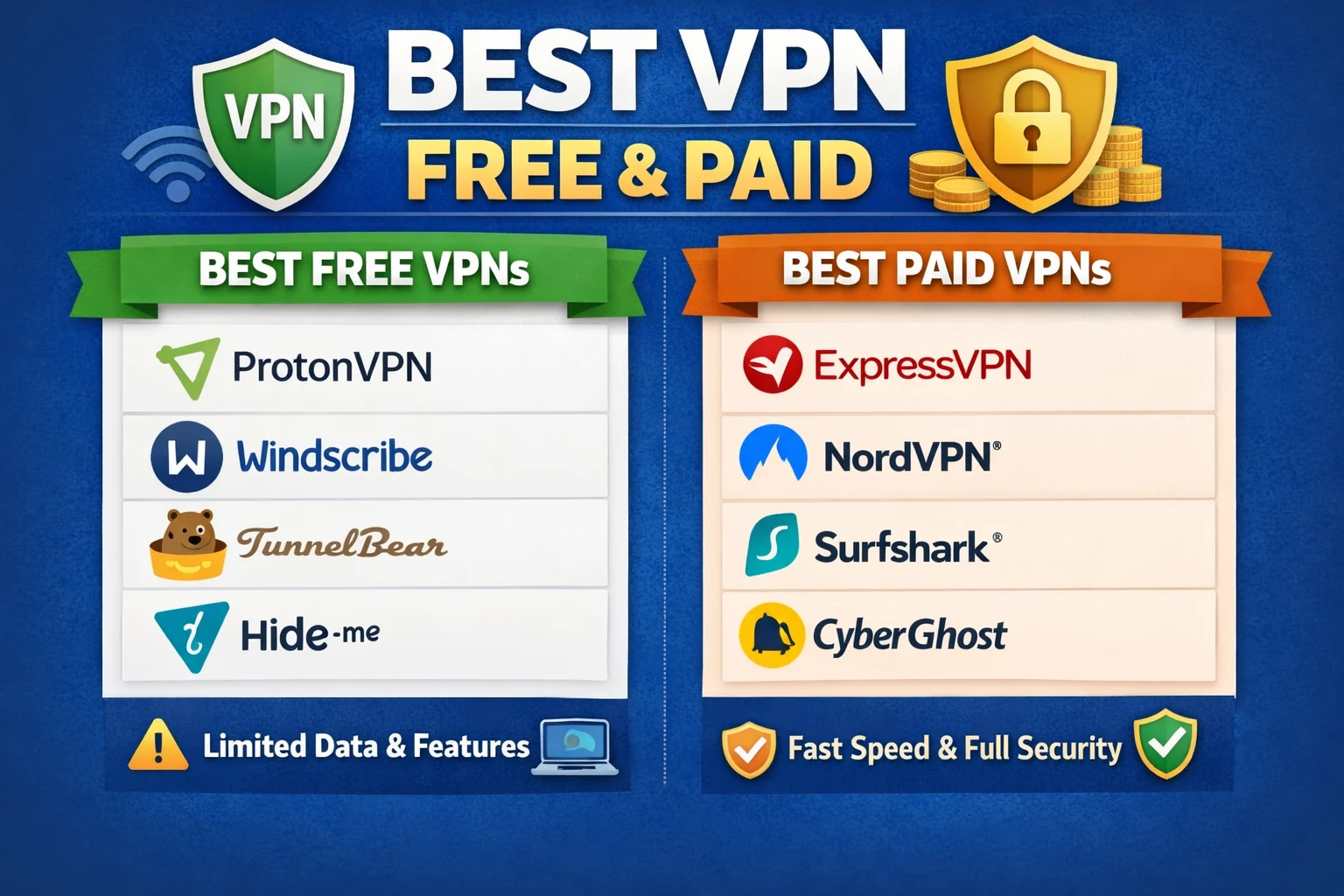
Table of Contents
Are you tired of your internet service provider tracking every website you visit? Worried about hackers on public WiFi stealing your personal information? Frustrated by geo-restrictions preventing you from accessing content you want to watch? You're not alone. In 2025, over 2 billion people worldwide are using VPNs to reclaim their digital privacy and freedom.
But here's the challenge: with hundreds of VPN services claiming to be the best, how do you choose between free and paid options without wasting money or compromising your security? This comprehensive guide will walk you through everything you need to know about selecting the right VPN for your needs, backed by current data and real-world testing.
Understanding Your Pain Points: Why You Need a VPN Right Now
Before diving into specific VPN recommendations, let's address the real problems you're facing online today.
The Privacy Crisis That's Getting Worse
Your internet service provider knows every website you visit. Advertisers track your movements across the web. Social media platforms build detailed profiles about your behavior. According to recent studies, cybercrime costs reached 9.5 trillion dollars globally in 2024 and are projected to surpass 10.5 trillion dollars by 2025, making it one of the largest economic threats worldwide.
The average corporate data breach now costs 4.45 million dollars, with healthcare breaches averaging an astronomical 10.93 million dollars per incident. While you might think these numbers only affect businesses, consider this: when companies get breached, your personal data is often what gets stolen and sold on the dark web.
The Public WiFi Danger You're Ignoring
That free WiFi at your favorite coffee shop? It's a hacker's playground. Without encryption, anyone on the same network can intercept your passwords, bank details, and private messages. Cybercriminals regularly set up fake WiFi networks with legitimate-sounding names to trick unsuspecting users into connecting and exposing their data.
Content Restrictions Blocking What You've Already Paid For
Traveling abroad and suddenly can't access your streaming accounts? Living in a region where certain websites are blocked? Geo-restrictions are frustrating barriers that prevent you from accessing content you have every right to see. Whether it's your home country's Netflix library or news websites blocked in certain regions, these artificial borders create real problems for internet users.
ISP Throttling That Slows Your Connection
Internet service providers often slow down your connection when they detect bandwidth-intensive activities like streaming or gaming. This practice, called throttling, means you're not getting the speeds you're paying for. A VPN can help mask your activity and prevent this selective slowdown.
The Critical Difference Between Free and Paid VPNs
Understanding the distinction between free and paid VPN services is essential for making an informed decision. The choice affects not just your wallet, but your security, privacy, and online experience.
What Free VPNs Actually Cost You
The phrase "if you're not paying for the product, you are the product" rings especially true for free VPNs. Research reveals a troubling reality: 88 percent of free VPN applications tested leak identifiable data, putting your privacy at risk rather than protecting it.
Free VPNs need to make money somehow. Many do this through:
Data logging and selling: Your browsing history, connection times, and personal information become products sold to advertisers and data brokers. This completely defeats the purpose of using a VPN for privacy.
Intrusive advertising: Constant pop-ups and banner ads interrupt your browsing experience, making simple tasks frustrating and time-consuming.
Limited bandwidth caps: Most free VPNs restrict your data usage to 500 megabytes or 10 gigabytes per month. Streaming a single high-definition movie can consume 3 gigabytes, meaning you'd hit your limit quickly.
Slower speeds: Free services typically have overcrowded servers, resulting in painfully slow connections that make streaming impossible and web browsing sluggish.
Security vulnerabilities: In 2024, detections of malware-laden fake VPN applications jumped 2.5 times in the third quarter compared to the previous quarter. Free VPNs often lack the robust security features needed to protect against modern threats.
Why Paid VPNs Deliver Real Value
Premium VPN services operate on a transparent business model: you pay for the service, and they protect your privacy. This alignment of interests creates a fundamentally different relationship than free alternatives offer.
Paid VPNs provide military-grade encryption, no-logging policies verified by independent audits, unlimited bandwidth for streaming and downloading, access to hundreds or thousands of servers worldwide, reliable speeds suitable for 4K streaming, dedicated customer support available around the clock, and advanced features like kill switches, split tunneling, and multi-hop connections.
The investment in a quality paid VPN typically ranges from two to five dollars per month with long-term plans, delivering comprehensive protection that free services simply cannot match.
The Best Free VPNs When Budget Is Your Priority
While paid VPNs offer superior performance and security, legitimate free options exist for users with tight budgets or occasional VPN needs. However, you must choose carefully to avoid the security nightmares plaguing most free services.
Proton VPN Free: The Gold Standard for Free VPNs
Proton VPN stands out as the best totally free VPN thanks to fast, secure, and unlimited free servers that don't track or record any web activity. Unlike most free VPNs, Proton doesn't impose data caps, making it genuinely useful for everyday browsing.
What You Get: Proton VPN Free offers unlimited data usage with no time restrictions, access to servers in five countries including the United States, Netherlands, Romania, Poland, and Japan, strong AES-256 encryption protecting your data, strict no-logs policy verified by independent audits, and support for one device simultaneously.
The Trade-offs: Free users experience medium server speeds, no access to streaming-optimized servers, no support for peer-to-peer file sharing, and connection to the nearest available server rather than choosing specific locations.
Who Should Use It: Proton VPN Free works well for privacy-conscious users who browse and use email without heavy streaming needs, students or budget-limited individuals needing basic protection, and anyone wanting to test VPN technology before committing to a paid service.
Recent data shows significant growth in Proton VPN adoption. Spain saw a 2,500 percent increase in Proton VPN Free registrations after government initiatives to crack down on illegal streaming, demonstrating trust in the service even under pressure.
Other Notable Free VPN Options
Windscribe: Offers 10 gigabytes of monthly data and access to servers in 10 countries. It successfully unblocks five Netflix regions, making it useful for occasional streaming. The generous data allowance covers moderate usage including some video streaming.
PrivadoVPN: Provides 10 gigabytes per month with support for 10 simultaneous devices, an impressive limit for a free service. After reaching the data cap, speeds become throttled but the connection remains available. Good for families sharing one account.
Hide.me: Delivers unlimited data but limits you to one device and five server locations. Strong privacy policies and security features make it reliable for basic protection, though the single-device restriction proves limiting for many users.
Critical Warning About Free VPNs
Avoid free VPNs that require no account creation and offer unlimited everything. These services almost certainly monetize through data collection or contain malware. Stick with freemium services from reputable companies that offer paid tiers, as they have viable business models beyond selling your data.
The Top Paid VPNs Worth Your Investment
Premium VPN services deliver comprehensive protection, reliable performance, and features that make your digital life better. After extensive testing and analysis of current offerings, four providers stand out for their combination of security, speed, and value.
Surfshark: Best Value for Unlimited Devices
Surfshark has earned recognition as one of the most affordable premium VPNs without compromising on quality. At 1.99 dollars per month for a two-year subscription, Surfshark offers great value for budget-conscious users with fast speeds, secure connections, and comprehensive features.
Pricing That Makes Sense: Surfshark offers three subscription tiers designed for different security needs. The Starter plan provides all core VPN features at 1.99 dollars per month with a 24-month commitment, 2.79 dollars monthly for 12 months, or 15.45 dollars for month-to-month flexibility.
The One plan adds antivirus protection, breach alerts, and a private search engine for 2.29 dollars monthly on a two-year plan. The One Plus plan includes everything from previous tiers plus Incogni data removal service for 4.19 dollars per month with long-term commitment.
All plans include three extra months free when choosing the two-year option, and every subscription comes with a 30-day money-back guarantee allowing risk-free testing.
Why Surfshark Stands Out: Unlimited simultaneous device connections mean you protect every device in your household with a single subscription. Surfshark upgraded the throughput of all its servers from 1 gigabits per second to 10 gigabits per second, ensuring fast speeds even during peak usage times.
The service operates over 3,200 servers across 100 countries, providing extensive global coverage for accessing content worldwide. Independent tests consistently rank Surfshark among the fastest VPNs available, making it suitable for 4K streaming and large downloads.
Advanced security features include military-grade AES-256 encryption, an automatic kill switch preventing data leaks if your VPN disconnects, MultiHop technology routing your connection through two VPN servers for extra security, and CleanWeb blocking ads, trackers, and malware.
Real-World Performance: Surfshark excels at unblocking streaming services including Netflix, Disney Plus, Amazon Prime Video, and BBC iPlayer. The service successfully bypasses geographic restrictions while maintaining speeds suitable for high-definition streaming.
For remote workers and frequent travelers, Surfshark offers NoBorders mode to work in restrictive countries, GPS spoofing to change your device's location, and split tunneling to route some traffic through the VPN while other apps use your regular connection.
NordVPN: Premium Performance for Maximum Security
NordVPN consistently ranks as one of the best overall VPN services, combining blazing-fast speeds with robust security features. A two-year NordVPN plan currently costs 2.99 dollars per month, making it competitively priced for the extensive features provided.
Comprehensive Pricing Options: NordVPN offers four tiers to match different security needs. The Basic plan covers essential VPN functionality at 2.99 dollars monthly with a two-year commitment, 4.59 dollars for annual billing, or 12.99 dollars month-to-month.
The Plus plan includes the VPN plus Threat Protection Pro, blocking ads and malware, along with the NordPass password manager at 3.89 dollars monthly on a 24-month plan. The Complete plan adds one terabyte of encrypted cloud storage through NordLocker for 4.89 dollars per month. The Ultimate plan incorporates NordProtect identity theft protection for 6.89 dollars monthly with long-term commitment.
All subscriptions include three extra months free on annual and biennial plans, plus a 30-day money-back guarantee for testing without risk.
What Sets NordVPN Apart: With over 8,400 servers spanning 129 countries, NordVPN provides one of the largest and most reliable server networks available. This extensive infrastructure ensures you always find a fast, nearby server regardless of your location.
The service employs its proprietary NordLynx protocol, built on the cutting-edge WireGuard technology. NordVPN regularly outpaces other top-tier VPN services in speed tests, making it ideal for bandwidth-intensive activities.
Security features include double VPN routing connections through two servers, Onion over VPN combining VPN encryption with Tor network anonymity, CyberSec technology blocking malicious websites and ads, obfuscated servers hiding VPN usage from network administrators and government censors, and dark web monitoring alerting you if your credentials appear in data breaches.
Superior Streaming and Gaming: NordVPN unblocks streaming platforms with remarkable consistency, maintaining access to Netflix libraries in over 15 countries, Disney Plus, HBO Max, and regional services worldwide. Dedicated streaming servers optimize for video playback, eliminating buffering and quality drops.
Gamers benefit from fast, stable connections reducing lag and ping times. NordVPN's extensive server network helps you connect to game servers in specific regions, useful for accessing games before they launch locally or playing with friends overseas.
Enterprise-Grade Security at Consumer Prices: NordVPN undergoes regular independent security audits, with verified no-logs policies confirmed by third-party firms. The company operates under Panama's jurisdiction, outside intelligence-sharing alliances that could compel data handover.
ExpressVPN: Premium Speed and Proven Reliability
ExpressVPN has built its reputation on delivering consistent performance, robust security, and user-friendly applications across every platform. In 2025, the service introduced a new tiered pricing structure making premium protection more accessible while maintaining the quality that made it an industry leader.
Flexible Pricing for Different Needs: ExpressVPN now offers three distinct tiers designed to match varying security requirements. The Basic plan provides all core VPN functionality at 3.49 dollars per month with a two-year commitment, 6.49 dollars monthly for 12 months, or 12.95 dollars for month-to-month flexibility. This tier supports up to 10 simultaneous device connections, a significant increase from the previous limit of eight devices.
The Advanced plan adds comprehensive digital protection tools for 4.49 dollars monthly on a two-year plan. This tier includes Keys, ExpressVPN's built-in password manager eliminating the need for separate password management applications, Advanced Protection shielding you from online threats as you browse, Identity Monitoring with fraud alerts and restoration support if your email or personal data appears in a breach, three days of unlimited eSIM travel data allowing secure connections the moment you land in another country, coverage for 12 devices simultaneously, and discounts of up to 50 percent on Aircove, ExpressVPN's WiFi 6 router extending VPN protection to your entire home network.
The Pro plan delivers the most comprehensive package at 7.49 dollars per month with long-term commitment. This tier includes everything from previous plans plus a dedicated IP address providing a stable IP address of your own, useful for secure remote work, banking, or streaming services requiring consistency, data removal services helping wipe your personal information from data broker lists, monthly credit reports and insurance coverage providing early warning and backup if your identity is misused, five days of unlimited eSIM travel data covering entire trips or busy workweeks abroad, support for 14 devices simultaneously, and discounts of up to 75 percent on Aircove.
All plans include extra months free with annual and biennial subscriptions. The two-year plan adds four bonus months while annual subscriptions include three additional months. Every tier comes with a 30-day money-back guarantee for risk-free testing.
Why ExpressVPN Commands Premium Pricing: ExpressVPN operates over 3,000 servers across 105 countries, providing extensive global coverage with consistent performance. The service developed its proprietary Lightway protocol, delivering the perfect balance of speed, security, and reliability. Independent tests consistently rank ExpressVPN among the fastest VPNs available, making it ideal for bandwidth-intensive activities.
TrustedServer technology represents a significant security innovation. All servers run entirely on RAM rather than hard drives, meaning all data automatically erases when servers restart. This architecture makes it technically impossible to store user data long-term, even if someone physically seized the servers. Combined with regular independent audits verifying the company's no-logs policy, this technology provides unmatched privacy assurance.
ExpressVPN successfully unblocks streaming services worldwide including Netflix libraries in numerous countries, Disney Plus, HBO Max, Amazon Prime Video, BBC iPlayer, and regional platforms. Dedicated streaming servers optimize for video playback, maintaining high-definition quality without buffering.
Standout Features for Power Users: Split tunneling allows you to route some applications through the VPN while others use your regular connection, useful for accessing local and international services simultaneously. Threat Manager blocks trackers and malicious sites before they load, improving both privacy and browsing speed. MediaStreamer extends VPN benefits to devices that don't natively support VPN software, including smart TVs, gaming consoles, and streaming devices.
For users in restrictive countries, obfuscated servers disguise VPN traffic as regular HTTPS connections, bypassing sophisticated detection systems. This feature makes ExpressVPN reliable even where VPN usage faces active blocking.
CyberGhost: Maximum Value with Extensive Server Options
CyberGhost delivers premium VPN protection at remarkably affordable prices, making comprehensive security accessible to budget-conscious users without compromising on features or reliability. With over 11,000 servers across 100 countries and specialized servers for different use cases, CyberGhost provides one of the most versatile VPN experiences available.
Unbeatable Pricing Structure: CyberGhost offers straightforward pricing based on subscription length. The 28-month plan, which includes two bonus months beyond the standard two-year commitment, costs just 2.19 dollars per month, making it one of the most affordable premium VPNs available. This plan bills at approximately 58 dollars upfront for the full 28-month period, delivering exceptional long-term value.
For users wanting shorter commitments, the six-month plan runs 6.99 dollars monthly, billed at approximately 42 dollars every six months. While month-to-month options recently became less available, the longer-term plans offer such significant savings that most users find the commitment worthwhile, especially with the generous refund policy.
CyberGhost provides industry-leading refund protection with a 45-day money-back guarantee on plans of six months or longer, the longest refund window among major VPN providers. This extended trial period gives you substantial time to test the service thoroughly across different use cases and locations before finalizing your commitment. Additionally, CyberGhost offers platform-specific free trials requiring no payment information, including 24 hours for Windows and macOS, three days for Android, and seven days for iOS.
What Makes CyberGhost Stand Out: The service operates over 11,000 servers spanning more than 100 countries and 125 locations, one of the largest networks in the industry. This extensive infrastructure ensures you consistently find nearby, uncrowded servers delivering optimal speeds regardless of your location or travel destination.
CyberGhost's specialized server approach simplifies finding the right connection for specific activities. Dedicated streaming servers optimize for popular platforms including Netflix, Disney Plus, Amazon Prime Video, and BBC iPlayer, with servers specifically configured to bypass geo-restrictions while maintaining high-definition quality. Torrenting servers provide optimized performance for peer-to-peer file sharing with enhanced security and no bandwidth restrictions. Gaming servers reduce latency and improve stability for online gaming, helping minimize lag during competitive play.
The service supports seven simultaneous device connections per account, covering laptops, smartphones, tablets, smart TVs, and more. While not unlimited like Surfshark, seven connections suffice for most households or small businesses.
Security That Doesn't Compromise: CyberGhost employs military-grade AES-256 encryption protecting all your internet traffic from interception. An automatic kill switch activates by default, immediately cutting internet access if your VPN connection drops, preventing accidental data exposure on unprotected networks. The service maintains a strict verified no-logs policy, independently audited by Deloitte, confirming the company doesn't collect or store your browsing history, connection times, or traffic data.
Operating from Romania, CyberGhost benefits from privacy-friendly jurisdiction outside intelligence-sharing alliances like Five Eyes or Fourteen Eyes. Romanian law doesn't require data retention, allowing CyberGhost to maintain its no-logs promise without legal conflicts.
Additional Value-Added Features: CyberGhost bundles several bonus tools with its subscriptions. A built-in password manager helps secure your login credentials without requiring separate applications. Identity Guard monitors data breaches and alerts you if your email or personal information appears in leaked databases. Long-term subscribers receive significant cloud storage through partner services, useful for backing up important files securely.
For users requiring consistent IP addresses, CyberGhost offers dedicated IP addresses as an optional add-on starting at 2.50 dollars monthly with two-year plans. This feature proves valuable for online banking, remote work access, or services that flag shared VPN IP addresses as suspicious.
User-Friendly Design: CyberGhost excels at making VPN technology accessible to non-technical users. One-click connection gets you protected instantly, while the intuitive interface clearly displays your connection status, current server, and available locations. The app provides helpful suggestions for optimal servers based on your intended activity, whether streaming specific services, torrenting, or simply browsing securely.
Twenty-four-hour live chat support staffed by knowledgeable agents in multiple languages ensures you receive help whenever needed. The comprehensive knowledge base and regular updates provide current troubleshooting information and setup guides for various devices and platforms.
Making the Right Choice: Free vs. Paid Decision Framework
Selecting between free and paid VPNs depends on your specific needs, budget, and security requirements. Use this framework to make an informed decision that protects both your privacy and wallet.
Choose a Free VPN If:
You need occasional protection for basic web browsing without streaming or downloading large files. Your budget absolutely cannot accommodate even a few dollars monthly. You're testing VPN technology before committing to a paid service. Your usage stays well under 10 gigabytes per month. You're comfortable with limited server options and medium speeds. You only need to protect a single device.
Proton VPN Free meets these criteria better than any alternative, offering unlimited data without the security compromises plaguing most free services.
Invest in a Paid VPN When:
You stream video content regularly or download large files. You need consistent, fast speeds for work or entertainment. You want to protect multiple devices simultaneously. You travel frequently and need reliable access to home content. You handle sensitive data including financial information or business documents. You require advanced security features like kill switches and multi-hop connections. You want verified privacy through independent audits and transparent policies.
For most users, the minimal cost of premium VPNs justifies the substantial benefits. CyberGhost offers the lowest monthly price at 2.19 dollars for long-term plans, making premium protection accessible even on the tightest budgets, while Surfshark provides the best value for families with unlimited device connections at 1.99 dollars monthly.
The Sweet Spot: Trial Before You Buy
Smart consumers test before purchasing. Surfshark, NordVPN, ExpressVPN, and CyberGhost all offer money-back guarantees, effectively providing risk-free trials of their full services. CyberGhost leads with a generous 45-day refund window, while the others provide 30 days. This approach lets you experience premium features, test speeds from your location, verify streaming capabilities, and ensure the service meets your needs before committing long-term.
Additionally, all four providers offer various free trial options on mobile devices, allowing you to test services before entering payment information.
Essential VPN Features You Must Have
Regardless of whether you choose free or paid, certain features are non-negotiable for adequate protection and usable performance.
Strong Encryption Standards
Your VPN must use AES-256 encryption, the military-grade standard that protects classified government communications. This encryption level would take current computers billions of years to crack through brute force, ensuring your data stays secure.
Avoid VPNs using outdated encryption like PPTP, which takes minutes to compromise. Modern protocols including OpenVPN, WireGuard, and IKEv2 provide the right balance of security and performance.
Verified No-Logs Policy
A VPN that logs your activity defeats the purpose of using one. Look for services with independently audited no-logs policies, meaning third-party security firms have verified the company doesn't collect or store your browsing history, connection times, IP addresses, or traffic data.
Companies based in privacy-friendly jurisdictions like Panama, Switzerland, or the British Virgin Islands face fewer legal requirements to retain user data. Avoid VPNs headquartered in countries belonging to intelligence-sharing alliances like the Five Eyes, Nine Eyes, or Fourteen Eyes agreements.
Kill Switch Protection
Network interruptions happen. Your VPN connection can drop due to server issues, network changes, or software bugs. Without a kill switch, your device automatically reverts to your regular internet connection, exposing your real IP address and unencrypted traffic.
A kill switch monitors your VPN connection and instantly blocks all internet traffic if the VPN drops, ensuring no data leaks even during momentary disconnections. This feature is essential if you handle sensitive information or live in regions with restricted internet access.
DNS Leak Protection
When you visit websites, your device queries Domain Name System servers to convert domain names into IP addresses. If these queries bypass your VPN tunnel, your internet service provider can see which websites you visit despite VPN usage.
Quality VPNs route all DNS queries through their own secure servers, preventing leaks that expose your browsing activity. Test your VPN for DNS leaks regularly using free online tools.
Adequate Server Coverage
More servers across diverse locations provide better performance and flexibility. A robust server network ensures you find nearby servers for optimal speeds, access to specific countries for content unblocking, backup options when servers become overcrowded, and redundancy preventing single points of failure.
Premium services like NordVPN and Surfshark maintain thousands of servers worldwide, while free VPNs typically offer fewer than 10 locations.
Common VPN Mistakes That Compromise Your Security
Even with a quality VPN, users make critical errors that undermine their protection. Avoid these common pitfalls to maximize your security and privacy.
Using Free VPNs for Sensitive Activities
Free VPNs lack the resources and incentives to provide robust security. Never use them for online banking, shopping with credit cards, accessing work accounts, or transmitting confidential information. The security risks far outweigh any cost savings.
Forgetting to Enable Your VPN
A VPN only protects you when it's active. Many users install VPN software but forget to connect before browsing, especially on mobile devices. Enable automatic connection features when joining networks, set your VPN to launch at startup, and configure always-on VPN mode on smartphones.
Choosing the Wrong Protocol
VPNs offer multiple connection protocols balancing speed and security differently. Outdated protocols like PPTP offer fast speeds but easily compromised security. Modern options like WireGuard or NordLynx provide both speed and protection. Select protocols based on your needs, using faster protocols for streaming and maximum security protocols when handling sensitive data.
Ignoring Software Updates
VPN providers regularly release updates addressing security vulnerabilities, improving performance, and adding features. Running outdated VPN software exposes you to known security flaws that attackers actively exploit. Enable automatic updates or check weekly for new versions.
Selecting Distant Servers Unnecessarily
Geographic distance affects VPN speeds significantly. Connecting to a server on another continent when you don't need that specific location creates unnecessary slowdowns. Choose the nearest server that meets your needs, reserving distant connections for when you specifically require that geographic location for content access.
How to Test Your VPN Is Working Properly
After setting up your VPN, verify it's actually protecting your privacy. Several free tools check your VPN's effectiveness.
IP Address Verification
Visit WhatIsMyIP or similar services with your VPN disconnected, noting your real IP address and location. Connect to your VPN and refresh the page. You should see a different IP address and location matching your VPN server. If you still see your real IP, your VPN isn't working correctly.
DNS Leak Testing
Use DNSLeakTest.com to check whether your DNS queries leak outside your VPN tunnel. With your VPN connected, run the extended test. Results should show your VPN provider's DNS servers, not your internet service provider's. Any ISP DNS servers indicate leaks compromising your privacy.
WebRTC Leak Detection
WebRTC technology in web browsers can expose your real IP address even with an active VPN. BrowserLeaks.com offers comprehensive tests revealing WebRTC leaks. If tests show your actual IP alongside your VPN IP, disable WebRTC in your browser settings or use VPN browser extensions with built-in WebRTC protection.
Speed Testing
Check your internet speeds without a VPN using Speedtest.net, noting download, upload, and ping times. Connect to nearby VPN servers and retest. Expect some speed reduction, typically 10 to 30 percent depending on the VPN quality. Premium services like Surfshark and NordVPN minimize speed loss, often maintaining 70 to 90 percent of your baseline speed.
The Future of VPN Technology and Privacy
The VPN industry continues evolving to address emerging threats and changing user needs. Understanding these trends helps you choose services positioned for long-term relevance.
Post-Quantum Encryption
Current encryption standards remain unbreakable by today's computers. However, quantum computers currently under development could theoretically crack today's encryption within hours. Forward-thinking VPN providers are implementing post-quantum encryption algorithms resistant to quantum computing attacks, future-proofing your security.
Integration with Broader Security Suites
Modern VPNs increasingly bundle with complementary security tools including antivirus software, password managers, data breach monitoring, and identity theft protection. This comprehensive approach addresses multiple security concerns through single subscriptions, simplifying your digital protection strategy.
Enhanced Censorship Circumvention
As governments become more sophisticated at detecting and blocking VPNs, providers develop advanced obfuscation techniques making VPN traffic indistinguishable from regular HTTPS connections. Features like Shadowsocks and obfuscated servers ensure reliable access even in restrictive countries.
Zero-Knowledge Architectures
Leading VPN providers are adopting zero-knowledge systems where even they cannot access your data or activity. RAM-only server infrastructure ensures all data erases when servers restart, eliminating the possibility of data seizure or breaches exposing user information.
Taking Action: Your Next Steps
You now understand the critical differences between free and paid VPNs, recognize essential features for adequate protection, and know which services deliver genuine value. The question becomes: what should you do next?
For Budget-Conscious Users
Start with Proton VPN Free to experience VPN protection without financial commitment. This legitimate free service provides unlimited data and strong security, offering real value while you save for premium service or decide whether VPN usage fits your lifestyle.
For Everyone Else
Premium VPNs cost less than a single coffee per month while protecting all your devices and online activities. The investment pays for itself through prevented identity theft, secure banking, unrestricted content access, and peace of mind.
CyberGhost offers the lowest price: Starting at just 2.19 dollars monthly for the 28-month plan, it provides comprehensive protection with over 11,000 servers worldwide and a 45-day money-back guarantee. Perfect for budget-conscious users who want premium features at the most affordable rate.
Surfshark delivers the best family value: At 1.99 dollars monthly with unlimited device connections, it protects your entire household for less than competing services charge for a single device. The 30-day money-back guarantee eliminates purchase risk.
NordVPN provides premium performance: If you need the absolute fastest speeds, largest server network with 8,400 servers, and most advanced security features, NordVPN's 2.99 dollars monthly investment delivers professional-grade protection with consumer-friendly pricing.
ExpressVPN excels in reliability: For users prioritizing proven performance, consistent speeds, and TrustedServer technology, ExpressVPN's Basic plan at 3.49 dollars monthly offers premium protection with the industry's most reliable infrastructure.
Implementation Strategy
Choose your VPN based on your budget and needs. CyberGhost offers the lowest price for long-term commitment, Surfshark provides unlimited devices for families, NordVPN delivers the fastest speeds and largest network, and ExpressVPN excels in reliability and proven performance. Download the appropriate app for your devices from official sources only. Create your account and complete the verification process. Install the VPN software on all devices you want to protect. Configure automatic connection settings for maximum protection. Test your VPN's effectiveness using the verification methods outlined above. Enable the VPN before connecting to any network, especially public WiFi.
Conclusion: Your Privacy Is Worth Protecting
The internet grows more dangerous each year. About 75 million Americans use VPNs to improve online privacy and security, recognizing that privacy isn't automatic in the digital age, it requires active protection.
Whether you start with a free service like Proton VPN or invest in premium protection through Surfshark or NordVPN, taking action today protects you from tomorrow's threats. Your browsing history, financial information, personal communications, and digital identity deserve protection from hackers, advertisers, and surveillance.
The choice between free and paid VPNs ultimately depends on your individual circumstances. However, for most users, premium VPNs offer such compelling value that the minimal monthly cost becomes one of the smartest investments in digital security you can make.
Your online privacy matters. The tools to protect it are affordable and accessible. The only question is: will you take action today?
Frequently Asked Questions
Can I use a free VPN for streaming Netflix?
Most free VPNs cannot reliably unblock Netflix or other streaming services. Streaming platforms actively detect and block VPN connections, and free services lack the resources to maintain access. Proton VPN Free specifically restricts streaming on its free tier. Premium services like Surfshark and NordVPN consistently bypass streaming restrictions.
Are free VPNs safe for banking and online shopping?
No. Free VPNs rarely provide adequate security for financial transactions. Many log your data, use weak encryption, or contain malware. Always use paid VPN services with verified no-logs policies and strong encryption when handling sensitive financial information.
How much speed will I lose using a VPN?
Speed reduction varies by service quality and distance to VPN servers. Premium VPNs like Surfshark and NordVPN typically reduce speeds by 10 to 30 percent, often imperceptible during normal usage. Free VPNs frequently cause 50 percent or greater speed loss due to overcrowded servers.
Can my internet service provider see I'm using a VPN?
Your ISP can detect that you're using a VPN but cannot see what you're doing through the encrypted tunnel. They observe encrypted traffic flowing to a VPN server but cannot read the contents. Obfuscated servers available in premium VPNs can even hide the fact you're using a VPN.
Do I need different VPNs for different devices?
No. Both Surfshark and NordVPN allow multiple simultaneous connections. Surfshark offers unlimited device connections, meaning one subscription protects all your devices including computers, smartphones, tablets, and smart TVs.
Will a VPN slow down my gaming?
VPNs can slightly increase gaming latency due to the extra encryption step. However, they can sometimes improve gaming performance if your ISP throttles gaming traffic or you connect to game servers in different regions. Choose nearby VPN servers to minimize latency impact.
Can I use a VPN to avoid government surveillance?
VPNs significantly improve privacy from government surveillance by encrypting your traffic and masking your IP address. However, they don't make you completely anonymous. For maximum protection in high-risk situations, combine VPNs with additional privacy tools like Tor browser and avoid logging into personal accounts.
How do I know if my VPN has a data leak?
Test regularly using online tools like DNSLeakTest.com, IPLeak.net, and WebRTC leak tests. Quality VPNs include built-in leak protection and kill switches preventing exposure if connections drop. Premium services undergo independent audits verifying their security claims.