How to Build an ATS-Friendly Resume That Actually Gets Read by Recruiters (Free Guide for 2026)
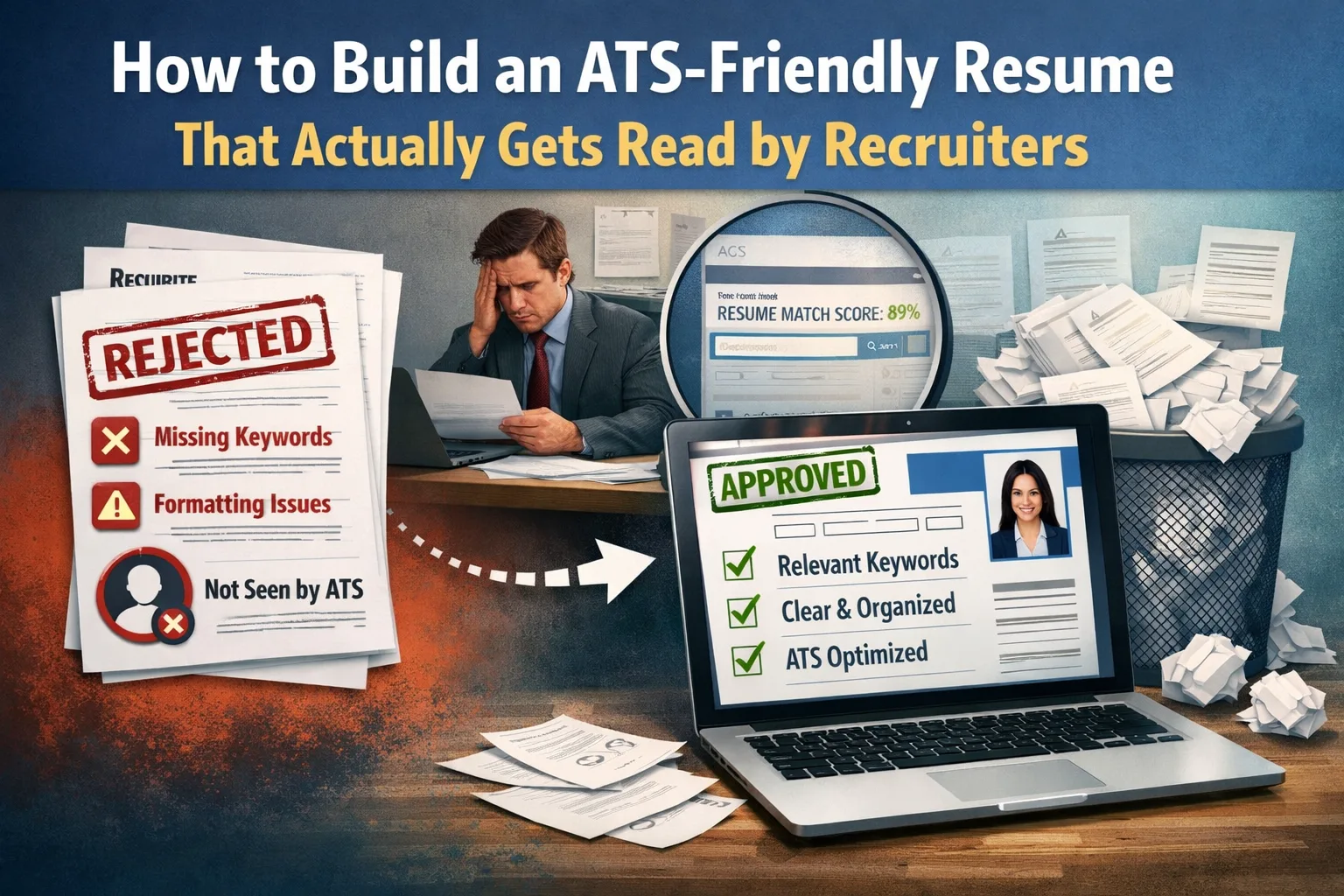
Table of Contents
If you're staring at a blank document, wondering how to summarize years of experience into a single page that actually gets noticed, you're not alone. The truth is, building a resume in today's job market feels like solving a puzzle where the rules keep changing. Between applicant tracking systems, recruiters who spend mere seconds scanning your document, and the pressure to stand out among hundreds of applicants, the process can feel overwhelming.
But here's what you need to know: creating a resume that opens doors doesn't require expensive services or design skills. What it requires is understanding what actually works in 2025 and having the right approach to showcase your unique value.
Why Your Resume Matters More Than Ever (And Why It's Harder to Get Right)
Let me share some numbers that paint the full picture of what you're up against. According to recent research, corporate job postings receive an average of 250 applicants. For popular companies or remote positions, that number can skyrocket into the thousands. Goldman Sachs alone received over 315,000 applications for their 2024 internship program.
Here's the challenging part: in a 2024 recruiter survey, 47% of hiring professionals said they spend 30 seconds to 1 minute reviewing a resume during initial screening, with 81% spending less than a minute total. Think about that. You have less time than it takes to microwave popcorn to make an impression that could change your career.
But before you panic, understand this: those constraints aren't meant to discourage you. They're meant to help you focus on what actually matters. When you know what recruiters are looking for and how they're evaluating resumes, you can build something that cuts through the noise.
The Technology That's Screening You (And How to Work With It, Not Against It)
In 2025, 97.8% of Fortune 500 companies use applicant tracking systems to manage applications, and among all recruiters, 75% rely on these systems in their hiring process. This isn't about robots stealing jobs from recruiters. It's about helping hiring teams manage volume so they can focus on the best candidates, which could be you.
Here's what this means practically: your resume needs to be both human-friendly and ATS-friendly. The good news? These aren't opposing goals. Research shows that 88% of employers believe they're losing out on highly qualified candidates who are screened out simply because they aren't submitting ATS-friendly resumes. This means there's a massive opportunity for job seekers who understand how to optimize their resumes properly.
An ATS-friendly resume uses clean formatting with standard fonts like Arial, Calibri, or Times New Roman in 11 or 12-point size. It avoids complex layouts with multiple columns, graphics, or unusual section headings that might confuse the parsing software. Most importantly, it includes relevant keywords from the job description naturally woven throughout your experience and skills sections.
What Recruiters Actually Look at (And What They Ignore)
Understanding the recruiter's perspective changes everything about how you structure your resume. Research shows that corporate recruiters typically work on 15 to 25 open positions simultaneously and can receive 300 to 500+ resumes per job, meaning a single recruiter could be managing up to 12,500 resumes at any given time.
Eye-tracking studies reveal that recruiters gravitate toward resumes with simple layouts, clear section headings, and content organized in an easy-to-scan pattern that flows naturally down the page. They're looking for specific information in a specific order: your name and contact details, your most recent experience, relevant skills, and educational credentials.
Hiring managers spend 67% of their screening time examining a resume's work experience section. This tells you exactly where to focus your energy. Your work experience isn't just a list of responsibilities; it's your opportunity to demonstrate impact through specific achievements and quantifiable results.
Building Your Resume From Scratch: A Practical Approach
The first decision you'll face is how to actually create your resume. You have several options, each with distinct advantages.
You can start with a word processor like Microsoft Word or Google Docs. This gives you complete control over every element, but it also means you're responsible for all formatting decisions. If you're not design-savvy, this can lead to spending hours tweaking margins and spacing instead of focusing on content.
Alternatively, you can use a dedicated resume builder tool. These platforms provide professionally designed templates that automatically format your information as you enter it. Resume builders guide you step-by-step through each section with built-in advice on what to write and where to put it, making it easier to create multiple versions and optimize each one for keywords and ATS scanning.
For those looking for a completely free option, platforms like Alison offer resume builders at no cost with unlimited downloads. These tools provide professionally designed templates that are ATS-friendly and allow you to update your resume as often as needed without worrying about compatibility issues or formatting problems. The advantage of using such a tool is that it removes technical barriers, letting you concentrate on showcasing your qualifications effectively.
The Essential Components Every Resume Must Have
Regardless of which tool you use, every effective resume in 2025 needs these core sections arranged in a clear hierarchy.
Contact Information: Your name should be the largest text on the page, followed by your phone number, professional email address, and LinkedIn profile URL if you have one. Keep this section clean and prominent at the top of your resume. Avoid including your full street address; city and state are sufficient in today's digital hiring environment.
Professional Summary or Headline: Career advisors emphasize that in 2025, it's crucial to use a professional summary at the top of your resume rather than an objective statement, as this provides an opportunity to highlight your professional experience, relevant skills, and overall value. This should be two to three sentences that capture your professional identity and what makes you valuable. Think of it as your elevator pitch in written form.
Work Experience: This is where 67% of screening time gets spent, so make it count. List your positions in reverse chronological order, starting with your most recent role. For each position, include the company name, your job title, dates of employment, and three to four bullet points describing your key accomplishments.
Here's a critical insight: recruiters scan down the left side of your resume, often reading only the first few words of each bullet point. This means your most important information should come first. Instead of writing "Responsible for managing a team," start with the impact: "Increased team productivity by 40% through implementation of agile workflows."
Skills Section: In 2025, it's more crucial than ever to use relevant keywords in your resume, as many companies employ applicant tracking systems to filter and prioritize resumes using specific terms from job descriptions. Your skills section should include both hard skills (specific technical abilities) and soft skills (interpersonal capabilities). Review the job posting carefully and ensure your skills section reflects the terminology used by the employer.
Education: Include your degrees, institutions, graduation dates, and any relevant honors or achievements. If you're a recent graduate, you can also include relevant coursework, but if you have significant work experience, keep this section brief.
Writing Bullet Points That Actually Impress
This is where most resumes fall apart. People list responsibilities when they should be showcasing achievements. The difference is profound.
A responsibility-focused bullet point looks like this: "Managed social media accounts for company." It tells the recruiter what you did, but not why it mattered.
An achievement-focused bullet point looks like this: "Grew company Instagram following from 5,000 to 47,000 in six months through strategic content calendar and influencer partnerships, resulting in 35% increase in website traffic." This tells a story of initiative and impact.
Resume action words are verbs that describe your duties and responsibilities with impactful language, and using them helps recruiters understand how you made an impact at previous jobs by emphasizing concrete goals you achieved. Start each bullet point with a strong action verb: developed, increased, reduced, launched, implemented, optimized, transformed. These words create a sense of agency and accomplishment.
Whenever possible, quantify your achievements. Numbers catch the eye and provide concrete evidence of your capabilities. Did you save time? How much? Did you increase revenue? By what percentage? Did you manage a budget? What size? Even if the numbers seem small, including them adds credibility and specificity to your claims.
Tailoring Your Resume for Each Application
Here's a truth that might frustrate you: the days of the one-size-fits-all resume are over. Research shows that 83% of recruiters say they're more likely to hire a candidate who has tailored their resume to the specific job they're applying for.
This doesn't mean rewriting your entire resume for every application. It means maintaining a master document with all your experiences and achievements, then customizing each version by emphasizing the most relevant elements for each position.
Read the job description carefully and identify the key requirements. Which skills are mentioned repeatedly? What experience seems most important? What keywords appear throughout the posting? Then, adjust your professional summary, reorder your bullet points, and fine-tune your skills section to align with what the employer is seeking.
If the job posting emphasizes leadership and you have management experience, make sure that's prominent in your work history. If they're looking for someone with data analysis skills, ensure those capabilities are front and center with specific examples of how you've used them.
Common Mistakes That Get Resumes Rejected
Even strong candidates make resume mistakes that cost them interviews. Understanding these pitfalls helps you avoid them.
According to research, 60% of hiring managers report finding typos on resumes. This is entirely preventable. Proofread your resume multiple times, use spell-check tools, and ask someone else to review it with fresh eyes. A single typo can make a recruiter question your attention to detail and professionalism.
Avoid dense paragraphs of text. Remember that recruiters are skimming your resume in under a minute. Large blocks of text are difficult to scan and will likely be overlooked. Use bullet points, white space, and clear section headings to make information accessible.
Don't include irrelevant information. Your high school achievements, unrelated hobbies, or every job you've ever held don't need to appear on your resume. Focus on what's relevant to the position you're seeking. For most professionals, including the past 10 to 15 years of experience is sufficient.
Never use generic templates that look like every other resume the recruiter has seen. While professional formatting is important, your resume should reflect your personal brand and make you memorable. This is where using customizable templates from resume builders becomes valuable, as they provide professional structure while allowing for personalization.
Formatting Decisions That Matter
The trend towards minimalistic and clean resume designs continues in 2025, with emphasis on clear structure, consistent formatting, bullet points for readability, and appropriate font choices. Think of your resume's design as the package that presents your professional story. It should be attractive enough to catch attention but not so elaborate that it distracts from content.
For most job seekers, a single-page resume is ideal. Unless you have extensive experience that requires more space, keeping your resume to one page forces you to prioritize what really matters. However, if you're a senior professional with 15+ years of relevant experience, a two-page resume is acceptable and even expected.
Use a standard, professional font between 11 and 12 points. Avoid decorative fonts, multiple font types, or tiny text that's difficult to read. Remember that some recruiters will print your resume, so ensure it looks good in black and white.
Create clear visual hierarchy through strategic use of bold text, spacing, and section headings. Your name should be the most prominent element, followed by section headings, then company names and job titles. This guides the reader's eye through your information in a logical flow.
Optimizing for Remote Work and Modern Hiring
As of 2025, remote work remains a significant part of the employment landscape, making it important to showcase your experience with this work modality on your resume. If you have remote work experience, highlight it. Mention specific tools and platforms you're proficient in, such as Slack, Zoom, Asana, or project management software.
Demonstrate your ability to work independently and manage time effectively. These are critical skills for remote positions, so if you have examples of successful remote projects or distributed team collaboration, feature them prominently.
The Cover Letter Question
Many job seekers wonder whether cover letters still matter. The answer is nuanced. Research shows that 66% of recruiters spend under 30 seconds reviewing cover letters when they do read them. This suggests that while cover letters receive less attention than resumes, they're still part of the application package.
A well-crafted cover letter can differentiate you from other candidates by providing context for your career transitions, explaining your interest in the specific company, or highlighting achievements that don't fit neatly into your resume format. Keep it concise, focused, and tailored to the position.
Continuous Improvement and Updating
Your resume should be a living document that evolves as your career progresses. Set a reminder to update it quarterly, even when you're not actively job searching. This ensures you capture accomplishments while they're fresh and maintain an accurate record of your professional development.
Pay attention to industry trends in your field. Are there new skills or certifications that are becoming standard? Are certain keywords appearing more frequently in job postings? Your resume should reflect the current landscape of your industry.
Consider taking courses or earning certifications that strengthen your resume. If you're using platforms like Alison for professional development, you can add completed courses directly to your resume, demonstrating your commitment to continuous learning. Many employers value candidates who invest in their own growth, and relevant certifications can differentiate you from other applicants.
Taking Action: Your Next Steps
Building a strong resume doesn't happen overnight, but it doesn't need to be an overwhelming process either. Start by gathering all the information you need: your work history, achievements, skills, and education. Then, choose a method for creating your resume that removes technical barriers and lets you focus on content.
Whether you use a word processor, a specialized resume builder like Alison's free tool, or another platform, the key is to start. Begin with your most recent position and work backwards, focusing on accomplishments rather than just responsibilities. Use strong action verbs, quantify your achievements, and tailor your content to match what employers in your field are seeking.
Remember that even with the best resume, job searching takes time and persistence. Career advisors report that job seekers typically send out 100 to 200 resumes when applying for employment, with an average interview rate of 2 to 5% for online applications. These numbers aren't meant to discourage you; they're meant to set realistic expectations and remind you that rejection is a normal part of the process, not a reflection of your worth.
The Bigger Picture
Your resume is a tool, not a test. It's designed to open doors to conversations where you can demonstrate your full potential. A strong resume gets you in the room; your skills, experience, and personality secure the job.
Focus on creating a document that authentically represents your professional story. Highlight what makes you valuable and unique. Use clear, compelling language that resonates with your target employers. And most importantly, remember that every successful professional started exactly where you are now, staring at that blank page and wondering how to begin.
The job market in 2025 onwards is competitive, but it's also full of opportunity for candidates who understand how to present themselves effectively. With the insights and strategies outlined in this guide, you have everything you need to build a resume that gets noticed, gets read, and gets results.
Your career journey deserves a resume that does it justice. Now you know exactly how to create one.